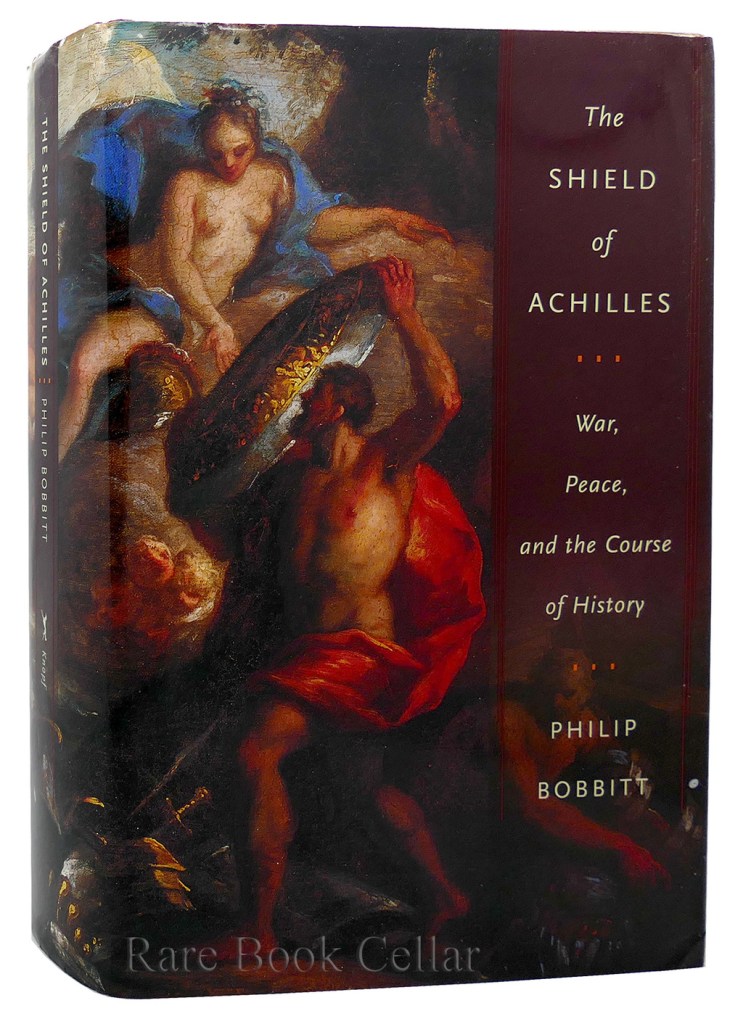
LIBRARIUM. The Shield of Achilles: War, Peace, and the Course of History by Phillip Bobbit, Part 1

This is a series of articles I wrote when I was studying history at George Wythe University.  This book was required reading.  These articles are my thoughts on various subjects covered in the book, with added updates as needed.  I highly recommend anyone interested in understanding modern events from an historical perspective to take the time to read this book.
THE STRATEGY OF ETHNIC CLEANSING

“Ethnic cleansing is thus not merely a political goal. It is a coordinated set of tactics in service of a well-thought-out military strategy…” (Phillip Bobbit, Shield of Achilles)

Most of the history of the world is the history of forced migrations and ethnic cleansing.  This is how it’s done.

Stage One:

Isolated terrorist-type attacks on rural populations, usually in response to some contrived “crime”, driving them from their homes and towns into “safe area” refugee cities, now filled with defenseless, hungry, displaced people.

Stage Two:

Besiege the refugee cities, cutting off supplies, and carry on a campaign of bombardment.

Stage Three:

Forced surrender of the refugee cities, kill all men of military age, rape the women to humiliate the population, remove the population to resettlement camps outside of their homeland.


If this pattern sounds familiar, it is because humanity has experienced it over and over and over again.  Genetic studies have shown that when a population is conquered, the men tend to be slain, but the women remain and future children bear the genes of the conquer and the ethnical characteristics are destroyed over time.

It is a sad commentary on the nature of power to corrupt mortal humans.  Lord Acton was right when he said, “Power tends to corrupt and absolute power corrupts absolutely. Great men are almost always bad men, even when they exercise influence and not authority; still more when you superadd the tendency of the certainty of corruption by authority.”

Below is a list of just some of the more well-known genocidal/ethnic cleansing events.   Tragically, there are many, many more . . .

Neo-Assyrian Deportations (9th–7th centuries BCE): The Assyrian Empire pioneered large-scale forced resettlements as state policy.  These mass deportations, affected an estimated 4 million people, including the population of Northern Israel (the “Ten Lost Tribes”) after the fall of Samaria in 722 BCE.  The earliest known example of ethnic cleansing.

Babylonian Captivity/Exile (597–538 BCE):  Thousands of Israelites from the Kingdom of Judah were resettled in Babylonia in 597 and 586 BCE, a form of selective deportation akin to ethnic cleansing.

Roman Destruction of Carthage (146 BCE): Rome besieged and utterly destroyed Carthage, killing most inhabitants and enslaving about 50,000 survivors. This genocidal form of ethnic cleansing effectively destroyed Carthaginian civilization.

Displacement of Native Americans (18th–19th centuries, United States): European settlers and later U.S. government policies, forcibly removed indigenous peoples from their lands through treaties, military action, and relocation to reservations.  This version of ethnic cleansing resulted in untold numbers of death, disease, starvation and the destruction of traditional social order.

Mormon Extermination Order (1838 – 1976): Missouri Executive Order 44, was an executive order originally issued by Missouri Governor Lilburn W. Boggs on October 27, 1838.  It was not rescinded until 1976, by then Governor Christopher Bond.  This ultimately led to the Church of Jesus Christ of Latter-day Saints leaving the United States for Mexico Territory in 1847.  Their settlement later became the state of Utah.

Armenian Genocide (1915–1916, Ottoman Empire): During World War I, the Ottoman government deported and massacred approximately 1.5 million Armenians, mostly Christians who were replaced by Muslims. This ethnic cleansing involved death marches, starvation, and killings.

The Holocaust (1941–1945, Nazi Germany and occupied Europe): The Nazi regime systematically murdered approximately 6 million Jews—two-thirds of European Jewry—through ghettos, forced labor, mass shootings, and extermination camps. It also targeted Roma, disabled people, Poles, Soviet POWs, and others, totaling around 11–17 million victims.

Nakba (1948, Palestine/Israel): During the 1948 Arab-Israeli War, approximately 750,000 Palestinians (about half the Arab population of Mandatory Palestine) were displaced from their homes in territories that became Israel. Israel officially attributes most departures to voluntary flight or war chaos. The event created a lasting refugee crisis, and with return denied, an ethnic cleansing of the areas involved.

Bosnian War (1992–1995, former Yugoslavia): Bosnian Serb forces, supported by Serbia, conducted widespread ethnic cleansing against Bosniaks (Bosnian Muslims) and Croats, involving forced expulsion, mass rape, concentration camps, and killings, meeting the criteria of ethnic cleansing.

Rwandan Genocide (1994, Rwanda):  From April to July 1994, Hutu extremists orchestrated the massacre of approximately 800,000–1 million people, primarily Tutsi but also moderate Hutu. These events were recognized as genocide by the International Criminal Tribunal for Rwanda.

Ethiopia-Eritrea Deportations (1998–2000, Ethiopia and Eritrea): Ethiopia deported around 75,000–80,000 people of Eritrean origin (many long-term residents or Ethiopian citizens by birth). These people faced asset freezes, family separations, and harsh conditions. Human Rights Watch identified Ethiopia’s actions as ethnic cleansing.

Rohingya Crisis (2017–ongoing, Myanmar): Myanmar’s military launched operations against the Rohingya Muslim minority in Rakhine State, involving village burnings, mass killings, rape, and forced displacement of over 700,000 people to Bangladesh. The U.N. described it as a “textbook example of ethnic cleansing”.

Uyghur Persecution (2017–ongoing, China): In Xinjiang, Chinese authorities have detained over one million Uyghurs and other Turkic Muslims in internment camps, subjected them to forced labor, sterilization, cultural erasure (e.g., destruction of mosques), and surveillance.

Tigray War Ethnic Cleansing (2020–2022, Ethiopia): In Western Tigray,  hundreds of thousands of Tigrayans were forced to suffer killings, rape, detention, and expulsions to homogenize the area. Both U.S. government and Human Rights Watch identified these actions as ethnic cleansing.

Gaza Conflict (2023–ongoing, Israel/Palestine): Following the October 7, 2023, Hamas attacks, Israel’s military response in Gaza has displaced over 1.9 million Palestinians (nearly 90% of the population), with widespread destruction and evacuation orders. Israel rejects these claims, stating operations target Hamas, with evacuations for civilian safety amid urban warfare.

I am reminded of a song by Bob Dylan called, “Blowin’ In The Wind”.

“How many roads must a man walk down
Before you call him a man?
How many seas must a white dove sail
Before she sleeps in the sand?

“Yes, and how many times must the cannonballs fly
Before they're forever banned?
The answer, my friend, is blowin' in the wind
The answer is blowin' in the wind

“Yes, and how many years must a mountain exist
Before it is washed to the sea?
Yes, and how many years can some people exist
Before they're allowed to be free?

“Yes, and how many times can a man turn his head
And pretend that he just doesn't see?
The answer, my friend, is blowin' in the wind
The answer is blowin' in the wind

“Yes, and how many times must a man look up
Before he can see the sky?
Yes, and how many ears must one man have
Before he can hear people cry?

“Yes, and how many deaths will it take 'til he knows
That too many people have died?
The answer, my friend, is blowin' in the wind
The answer is blowin' in the wind.”


Ultimately, the answer lies in all of us, and in none of us, unless we change our own hearts and minds, then seek to change the hearts and the minds of the people on the ground and speak up or take action at injustices we see in our spheres of influence.

Original version published on 17 February 2009.
CHANGING THE WORLD

“Never doubt that a small group of thoughtful, concerned citizens can change the world. Indeed, it is the only thing that ever has.” -- Anthropologist Margaret Mead, 1901-1978

The recent death of Pope Francis took me down memory lane to my junior high years when I joined the Catholic Church for a time. The man who gave me my first Holy Communion was Archbishop Timothy Manning of Los Angeles, California. Later he became a Cardinal serving as cardinal-elector during two conclaves which selected two different Popes – John Paul I and John Paul II. He passed away in 1989.

I loved my time in the Catholic Church. I visited various types of nunneries, pondering how I could best serve God. One of the most spiritual weekends I had as a teenager was during a school field trip to a monastery in Valyermo, California. In spite of such positive experiences, I chose another religious path in adulthood for various reasons.

Even though I didn’t remain in the Catholic faith, one thing is self-evident: over two thousand years of history and the lives of perhaps over a billion people globally have been influenced by its teachings and actions. European political and religious history felt its guiding force for good or ill, spilling over into the Americas and beyond beginning in the 1500s.  In fact, the first physical Christian church to be built in what would eventually become the United States of America was the Catholic San Miguel Mission church founded in 1610 in the area now known as Santa Fe, New Mexico.

The movement which became the Catholic Church of today, has had many branches, known by many names and in many nations.  Orthodox Christianity, Protestant Christians, Congregationalists, Baptists, Non-Denominational Christians, Hutterites, Amish, countless names and countless generations – all have their root in one of Margaret Mead’s small groups of “thoughtful, concerned citizens” who, indeed, changed the world.

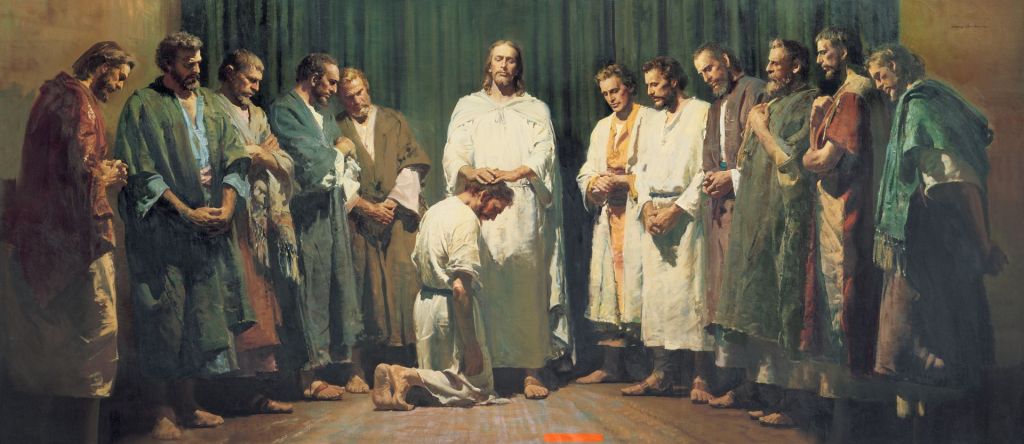
This small group are known as the Apostles of Jesus Christ, a small group of  twelve imperfect men, among the leading devoted disciples of Jesus Christ in the days of Roman Judea, without internet, without phones or radio or television or even newspapers. It was their tireless travelling to preach the Gospel of Jesus Christ and their dedication to writing letters and histories that changed the world. The truth of their impact cannot be denied by any worthy historian of note. The world of today is what it is because of their committed concern for the salvation of humanity.

Next year, America will be celebrating the 250th anniversary of the signing of its Declaration of Independence, another example of a “small group of thoughtful, concerned citizens” who changed the world. Fifty-four men who gave all they had for the cause of Liberty, pledging their lives, their fortunes, and their sacred honor.  Like the ancient Apostles, some lost their lives and the lives of family members.

American influence definitely re-focused the global political world from empire building to the concept of Liberty and Freedom of Conscience for every member of the human race in the short passage of time since the Revolution. It could be seen as the second phase of the movement led by the original Twelve Apostles, this time without regard to specific religious or political affiliation. 

The basic “small group of thoughtful citizens” is the family.  Within a self-contained, functioning family, its members learn how to work together, how to solve disputes, how to love one another, skills that are a strong foundation for leadership as members move into the larger world around them.

Can we change the world? Yes! In our homes and families, in our churches or other community organizations, the list is endless, and the causes are endless. Wherever these “small groups of thoughtful concerned citizens” gather together and focus their energies on providing solutions to problems and challenges, they will definitely change their world.

Business leader Warren Bennis said, “Every great group is an island… but an island with a bridge to the mainland.”  Reminds me of Alaska’s own Aleutian Islands, a long chain of what appear to be isolated communities connected originally by sea-faring skin boats or dog sleds on the ice in winter but now by better boats, airplanes, the internet and satellite technology.

 We don’t build our bridges to humanity the same way the original Apostles did, but we can reach out to “the mainland” in other ways not even imaginable to them. Email, mobile phones, videoconferencing, social media are the first things we think of but let’s not forget about reaching out to others in our real-world sphere of influence, those with whom we come into physical contact daily or weekly as we go about our lives, some who may share our concerns. 

Do not be discouraged as you go about trying to change the world around you.  God promises, “Fear thou not; for I am with thee: be not dismayed; for I am thy God: I will strengthen thee; yea, I will help thee; yea, I will uphold thee with the right hand of my righteousness.” (Isaiah 41:10)


Originally published in the Faith column of the Frontiersman newspaper: Changing the World

THE CHANGING OF THE GUARD

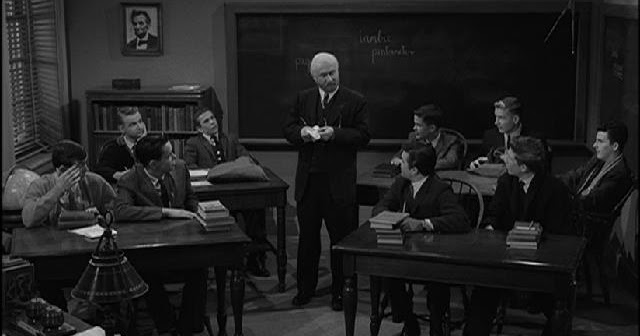
In early December I came across an episode of the old black and white Twilight Zone television series called “The Changing of the Guard” (the last episode of Season 3). I have spent a lot of time thinking about it and watching it more than once.

This story is set in 1950. An elderly professor is being retired after 51 years of teaching poetry in a boy’s school in Vermont. He begins to feel as if he has made no positive contribution to the world around him and contemplates suicide. In this state of mind, he wanders out into the snowy winter cold, with his pistol in hand. Standing before a statue of famous educator Horace Mann, he raises the pistol to his head. At that moment he hears the school bell ringing. Puzzled, he wanders into his classroom. As he stands there, he watches the ghosts of former students take their seats, many who had passed away. They share the lessons he taught them, lessons in courage, humanity, and self-sacrifice. One was a United States Marine who died on Iwo Jima during World War II, receiving the Congressional Medal of Honor. Another was the first to die in the battle of Pearl Harbor, but only after he had saved seven men trapped in a boiler room aboard a United States Navy ship. A third was a medical scientist who had offered to take x-ray treatments in an early experiment to destroy cancer cells but ended up dying of leukemia anyway. There were others who shared the morals and values they had gained from their interactions with this humble teacher of boys who became good men.

It is quite a contrast to the chaos, anger, and hatred of the changing of the guard America has been experiencing during  the 2024 presidential election season and its aftermath. We could have used a few good men and women taught by such teachers.

Having now reached Senior Citizen Status in my own right, I think more and more about the changing of the guard in my family and in my sphere of influence. Have I taught them well enough? Have I passed on the values and lesson they will need to successfully navigate through their own lives? Only time will tell, as the professor found out in his vision.

The Old Testament Book of Proverbs is filled with gems of wisdom, in particular Proverbs 22:28 when it tells us to “Remove not the ancient landmarks”.  Ancient landmarks were standing stones set up to mark boundaries.  During a time of war, the Prophet Samuel “took a stone and set it up between Mizpah and Shen and called its name Ebenezer; for he said, “Till now the Lord has helped us.” (Book of Samuel 7: 12-13).  The word “ebenezer” means “stone of help” in Hebrew and is referred to in one of my favorite hymns “Come Thou Fount of Every Blessing” (first line of the second stanza): “Here I raise my Ebenezer, hither by thy help I come.” Identifying the important landmarks of our civilization is critical to keeping the peace in any Changing of the Guard.

The first landmark is the knowledge of a Divine Creator. It is the most important landmark of Christianity, one which is the key standing stone from which all other landmarks should be measured.

The Old Testament gives us the Ten Commandments as basic laws to live by, the first three relating to our relationship with God: “Thou shalt have no other gods before me”, “Thou shalt not make any graven images (idols)”,  and “Thou shalt not take the name of the Lord thy God in vain” (Exodus 20:3 – 7).

1 Corinthians 8:6 states, “But to us there is but one God, the Father, of whom are all things, and we in him; and one Lord Jesus Christ, by whom are all things, and we by him.”

In the Church of Jesus Christ of Latter-day Saints, the First Article of Faith states, “We believe in God, the Eternal Father, and in His Son, Jesus Christ, and in the Holy Ghost.”

Did you know that 49 out of the 50 state constitution preambles mention a supreme being by one of several names for God?  This includes Alaska: “We the people of Alaska, grateful to God and to those who founded our nation and pioneered this great land, in order to secure and transmit to succeeding generations our heritage of political, civil, and religious liberty within the Union of States, do ordain and establish this constitution for the State of Alaska.”

There are other landmarks too numerous to list but these include faith, hope, charity, courage, compassion, humility, patience, and kindness.

The moral of the Changing of the Guard story is found also found Proverbs 22:6, “Train up a child in the way he should go: and when he is old, he will not depart from it”.


Originally published in the Faith column of The Frontiersman.

Photo credit 1: “Changing of the Guard” Twilight Zone television series, Season 3.

Photo credit: Stones of Stenness

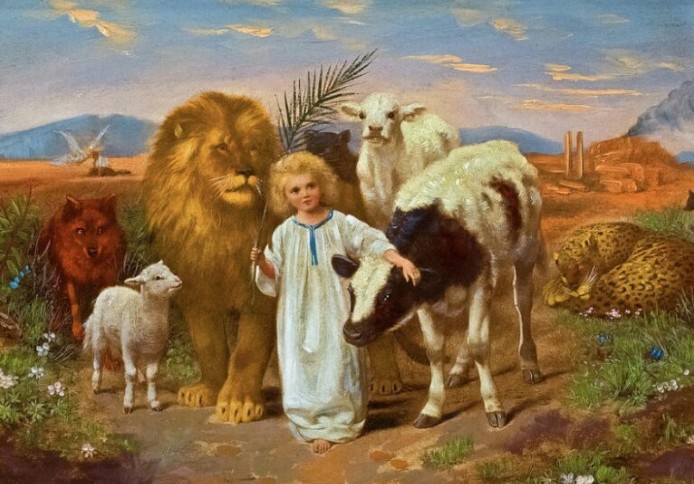
A Little Child Shall Lead Them

“The wolf also shall dwell with the lamb, and the leopard shall lie down with the kid; and the calf and the young lion and the fatling together; and a little child shall lead them.” Isaiah 11:6

I saw a video on Facebook the other day. It recorded an event at the finish line of a running race for young boys, about 10 years old. Two boys were getting close when one’s shoe flipped off and he fell to the ground with a hurt ankle. The other boy kept running past him. When he got to the finish line, he stopped. Looking back, he ran towards the downed boy, helped him up and together they headed toward the ribbon still strung across the track. Coming up fast behind them were two other boys. Instead of going around and winning the race, both of these boys slowed down and all four crossed the finish line together, laughing and hugging in a circle, happy they had all reached their goal.

My heart was touched. I thought, “This is what life is all about — lifting spirits, easing burdens, focusing on the joy of all of us crossing the finish line of life together, even if we have been damaged along the way.” Proverbs 20:11 observes, “Even a child is known by his doings, whether his work be pure, and whether it be right.” These boys were pure and right in that moment, and the happiness on their faces as they crossed the line together reflected their goodness.

Boys become men. These boys already understand the commitment of “No man left behind”. This is the unofficial slogan of U.S. military, especially the United States Marine Corps. Two monuments stand in front of the Warrior Hope and Care units at both Camp Pendleton in San Diego, California and at Camp LeJeune in North Carolina. They depict two soldiers helping a third wounded soldier back to safety.  Both are based on a photograph taken by combat photographer Lucien Read during the Battle of Fallujah (Iraq) in November of 2004. 

All of us trip and fall at some point in our lives, either emotionally, physically, or spiritually, through our own choice or by the choice of others or by accident. It will happen to us or to family and friends or to strangers. How will we behave? What choice will we make? Who will we help? Who will help us?

In Luke 10, Jesus told the story of the Good Samaritan who, while traveling along a road in ancient Israel, saw an injured man lying in his path. Instead of leaving him there and gossiping about him at the next inn along the way, the Samaritan had compassion, tended to his wounds and paid for his care until he would pass by again to check on him. 

We are all children of God. We never know when we will meet a brother or sister in need. One such encounter happened to me several years ago at the Wasilla Library. I had taken my young grandson, about 18 months old, outside. It was in the fall and chilly outside, but he needed some space to toddle about and be loud. A man saw us and headed our direction. He appeared to be a native Alaskan dressed in dirty worn camouflage clothing. He seemed to be on some sort of drug or alcohol and probably homeless. Lots of thoughts filled my mind. Is he dangerous? Is he begging? I have nothing to give. Should I go inside? 

I decided to stay, and we began a conversation. He came to see the baby, he said.  He told me his name and a bit about himself, about growing up in a village in the bush. He was kind but he never asked me for anything, except if could he play with the baby, and did I know of anyone who was hiring. After a while, he moved on. Sometimes all that is needed is a smile and friendly conversation to brighten someone’s day, even though we cannot fix their entire life.

I have had other encounters with strangers – in airports, on the street, in a line at the store. Some had amazing consequences, others were just quiet moments of connecting with another human being. Not all encounters with strangers are positive, but if we are open to the prompting of the Holy Spirit who knows what miracles we may witness.

A few years ago, I had the opportunity to sing at the Washington D. C. Temple Visitors Center with the Norfolk Stake Choir (also known as the Tidewater Mormon Choir). One number we sang is called “A Little Child Shall Lead Them”. The words and music still echo in my mind: “A little child shall lead them, he will bring them home, all the earth will see him, the knowledge of the Lord.”

What is the knowledge of the Lord? To love one another, to bear one another’s burdens, to mourn with those that mourn, to be peacemakers, to share the light of Christ in whatever circumstances we find ourselves.

May we be like those young innocent runners who found great joy in helping their friend cross the finish line so we can all be winners this Christmas season, and all year ‘round.


Photo Credit 1: painting by William Strutter Peace “A Little Child Shall Lead Them”.

Photo Credit 2: Fallujah statue, based on Lucian Read’s photograph, outside the Fisher House at Camp Lejeune in Jacksonville, N.C., on Wednesday, November 19, 2014. (Mike Morones/Marine Corps Times)

Column originally published in the Frontiersman newspaper’s Faith Column on 12 January 2025.

The Testimony of Mushrooms

“I believe in Christianity as I believe that the sun has risen: not only because I see it, but because by it I see everything else.”  C. S. Lewis

One day last fall, during mushroom season, I decided to research the Amanita muscaria mushroom, the red ones with white raised spots, which grow so abundantly in our area. What makes such a pretty little thing so poisonous? This led me down an interesting path I call a “Thought Trek”. They are never boring journeys, rambling maybe, but never boring.

Arsenic. That’s why Amanitas are deadly, they draw up arsenic from the soil. Something called Amatoxins form and that is what makes people sick, even die when Amanitas are eaten. I began to wonder what the arsenic levels in my soil might be with the large number of Amanitas which grow each year. What about our well water? Is it safe? Why do slugs eat them and don’t seem to die? 

I also noticed that these types of mushrooms seem to be part of an ecosystem which includes spruce, birch, lichens, and mosses. Is there a bio-chemical relationship between all these plants? That required more research but for the sake of the reader, the short answer is yes. Each one plays a vital role in keeping each other healthy and happy and non-poisonous to each other. Where arsenic exists, mushrooms pull it up out of the soil, chemically transmute it so that it becomes inert (less harmful to humans and slugs apparently). Still, eating them in too large of a dose can still sicken or kill the consumer.

It is the interconnectedness of this particular mini-ecosystem in my back yard which led me to ponder on how this all happened.  There seemed to be only two ultimate questions to consider.  Question 1: did this system evolve over thousands if not millions of years?  Question 2: did an Organizing Intelligence engineer the natural laws we see in operation around us today?

I stood on my second story deck, surveying and pondering the options every day for about a month. If my ecosystem evolved, how did any of the independent species survive long enough to pass on descendants if there were no magic mushrooms to absorb arsenic? How did each know what another would need bio-chemically in order to evolve a mechanism to meet that need without dying out during the vulnerable millennia of existence?  I tried to imagine the concept of Evolution, Natural Selection, and millions of years. It’s quite a leap of faith to think that all the imperfect stages of each tree, or moss, or mushroom somehow survived until they reached the balance we see before us in our modern world.

I decided to take another leap of Faith. Is there some Organizing Intelligence responsible for all this? It is human nature to organize various pieces of things and concepts into a civilization with all its art, engineering, books, computers, and more. If we just threw the basic elements of clay or metal or amino acids into a shallow pond of water, would they eventually combine and grow into magnificent cities? Logic and reason tell us this would never happen in a million years or a trillion years. Why do we think that the basic building blocks of atoms and molecules would magically organize themselves into complicated biological organisms and systems without a triggering force? The fact that we can even think about these things implies an organized intelligence.

Back to C. S. Lewis statement “I believe in Christianity as I believe that the sun has risen: not only because I see it, but because by it I see everything else.”   My month-long pursuit of trying to figure out the connectedness of my little birch-spruce-mushroom-moss-lichen forest from an evolutionary standpoint was a failure in terms of the godless world view of the modern world. I found that, like C.S. Lewis, I can only interpret the world through the lens of Christianity, a basic tenet of which is that there is a God, by whatever name you call Him, or whatever you conceive the Organizing Intelligence to be. Nature itself testifies of this, as do we as human beings, created in His image – organized in our complex human biology, organized in our complicated thought world, and organized in relationship to ourselves and our environments.

I find the testimony of mushrooms to be a powerful one. It is my Faith and I’m sticking with it.


Letters to Editors Archive: The Loss of American Neutrality and More.

A shorter version was originally written in April of 2003 (Quincy Valley Post-Register) Please see Epilogue below for some more recent thoughts in August 2024.

J. Reuben Clark, former US Undersecretary of State and former US Ambassador to Mexico once said, “America, multi-raced and multi-national is, by tradition, by geography, by citizenry, by natural sympathy, and by material interest, the great NEUTRAL nation of the earth.”  

Today America is experiencing the results of casting aside that tradition and has become embroiled in a War that has polarized our nation and the world.  

We have lost the spirit of Lady Liberty, who holds her lamp high to symbolize to the world that there is justice, peace, and mercy available to all who would choose to abide by the principles of the Constitution of the United States of America.  

We have lowered our standard of morality.

We have made citizenship a matter of financial gain rather than of honor.

We have squandered the blood of our young men and women warring in foreign nations, nations which often turn to bite the hands that feed them.  

My solution:

Let us return to our Great Tradition of independence and liberty, of economic freedom and prosperity, of justice and mercy.  

Let us return to the original intent of the Constitution.  Let us teach the principles upon which this nation was founded – that all mankind are created with the un-alienable rights to equality under the law, of economic opportunity, and the untouchable freedoms as enumerated in, but not limited by, the Bill of Rights.

Let us remember that these gifts were bestowed upon us by a benevolent Creator, not a government, that mankind cannot usurp nor deny those rights.  

We can regain our status as the torchbearer of representative government and liberty by remembering the above quote and working towards re-establishing that government through the political process, by voting our conscience, by electing moral and just persons to public office, and by educating ourselves about the issues placed before us each election. 

The End.

EPILOGUE: Whatever our position on the issues in this current election year, we face a critical decision which will affect all our futures — good or bad, easy or hard, war or peace. Rather than taking sides and playing an “I win/you lose” game, perhaps we should try the Principle approach and a “blind test”, that is judging candidates, issues, and national policy by the following standards:

  • Does the (candidate, issue, policy) promote Liberty or Tyranny?
  • What has been the history of each (candidate, issue, policy)? Have their historical and documented actions or results promoted Liberty or Tyranny?
  • Governments do not create wealth, they redistribute the wealth of others, usually taken by threat of force through taxation. Does the (candidate, issue, policy) take more wealth or less wealth?
  • Do the (candidates, issues, or policies) promote a free-market economy (Liberty) or do the regulations exceed that which is necessary to protect the lives and liberty of consumers (Tyranny)?
  • Does the candidate represent the people he or she will serve, or do they represent their financial backers, or their own personal agenda or the agenda of their declared party?

May the candidate with the highest score get your vote and win, without regard for party affiliation or fear of the enemy. It’s the only way to start swinging the pendulum back towards the promise of American Liberty in its purest form.

Independence Day 2024: What Legacy are We leaving for our Ourselves and Our Posterity?

On November 19, 1863, President Abraham Lincoln gave one of the most famous speeches in American history following the Battle of Gettysburg during the War Between the States.  Whether you are fan of Abraham Lincoln’s political decisions or not, in that moment in time and in that place, he spoke words which are timeless in their sentiments.  As I was recently re-reading these great words, the following thoughts came to me regarding the state of America in our day.

237 years ago, the Founding Fathers brought forth on this continent a new nation, conceived in Liberty, and dedicated to the Proposition that All Mankind are created Equal. They understood that there are certain un-alienable rights which belong to every human being from conception until natural death.  Such un-alienable rights may not be transferred from person to another person or entity, without the express permission of those to whom the rights belong, that is We, the People.  Among these rights are Life, Liberty, and the pursuit of happiness.  The government they created is not intended to either usurp rights or bestow rights.  It can only have jurisdiction over that portion of those pre-existing rights which We, the People, allow them to temporarily control.  We can take the power of government back at any time, and we can give them other powers at any time, through the process provided for in Article V of the U.S. Constitution, and through the principle of Civil Disobedience.  Government, however, cannot lawfully dictate the Rights of the People by its own power—not by unconstitutional legislation, or by executive action, or through regulation and policy, or by judicial opinions.  It can neither create rights nor destroy rights.   Its one and only job is to protect pre-existing rights.

“We the People of the United States, in Order to form a more perfect Union, establish Justice, insure domestic Tranquility, provide for the common defence, promote the general Welfare, and secure the Blessings of Liberty to ourselves and our Posterity, do ordain and establish this Constitution for the United States of America.” (Preamble to the United States Constitution)

Now we are engaged in a great political war, “testing whether this nation, or any nation so conceived and so dedicated, can long endure”. 

In the past 237 years, we have met our fellow Americans, as well as the soldiers of many nations, on many battlefields, both domestic and abroad.  Today we are meeting those who are opposed to Liberty on the new battlefields of social media, controlled mainstream media, in the courts and on the very streets of America.  We have strayed from our principles; indeed, we have been sidetracked by the very prosperity created by those principles.  We have so much “free time and abundance” because of that prosperity, we waste ourselves and our resources by focusing on self-gratification and material things more than we value things of the mind and heart.  When someone does stand up against the tyranny, we berate and belittle these new liberty warriors, those who take off their masks and refuse to obey unlawful and unconstitutional orders from bureaucratic servants.  Yet, the very air of liberty we breath was bought and paid for, and is still being bought and paid for by those sacrifices made on not only the traditional battlefields but the modern social battlefields as well. 

President Lincoln was speaking only of Gettysburg when he said, “we can not dedicate—we can not consecrate—we can not hallow—this ground. The brave men, living and dead, who struggled here, have consecrated it, far above our poor power to add or detract.”   But I say, we cannot dedicate nor consecrate, nor hallow this land of Liberty, our beautiful America, unless we pay the price the men at Gettysburg paid on both sides of that conflict.

Lincoln went on to say, “The world will little note, nor long remember what we say here, but it can never forget what they did here. It is for us the living, rather, to be dedicated here to the unfinished work which they who fought here have thus far so nobly advanced. It is rather for us to be here dedicated to the great task remaining before us—that from these honored dead we take increased devotion to that cause for which they gave the last full measure of devotion—that we here highly resolve that these dead shall not have died in vain—that this nation, under God, shall have a new birth of freedom—and that government of the people, by the people, for the people, shall not perish from the earth.”

Another President, Franklin Delano Roosevelt, from political party other than that of President Lincoln had some words of wisdom for us as well.  He said, “There is a mysterious cycle in human events. To some generations much is given. Of other generations much is expected. This generation of Americans has a rendezvous with destiny.”  Whether you agree with his political decisions or not, there is truth to be found here.

The cycle of American Liberty has turned again.  We are the inheritors of the blessings of Liberty, but we are also the destroyers unless we can stop the insanity.  It is for us and no one else, “The buck stops here” as President Harry S. Truman said.  It is our generational duty to those who come after.  We must be “dedicated to the great task remaining before us, we must resolve that this Republic and those who built it, sustained it, bled for it, will “not have done so in vain”.

Let us all humble ourselves in prayer, then put our shoulders to the wheel.  Let us work however, and wherever we may best serve with the God-given talents with which we have each been blessed, in our homes and our communities.  Only then will we experience “a new birth of freedom” and that this “government of the people, by the people, and for the people, shall not perish from the earth.”  So help us, God.


The Gettysburg Address

Four score and seven years ago our fathers brought forth on this continent, a new nation, conceived in Liberty, and dedicated to the proposition that all men are created equal.

Now we are engaged in a great civil war, testing whether that nation, or any nation so conceived and so dedicated, can long endure. We are met on a great battle-field of that war. We have come to dedicate a portion of that field, as a final resting place for those who here gave their lives that that nation might live. It is altogether fitting and proper that we should do this.

But, in a larger sense, we can not dedicate—we can not consecrate—we can not hallow—this ground. The brave men, living and dead, who struggled here, have consecrated it, far above our poor power to add or detract. The world will little note, nor long remember what we say here, but it can never forget what they did here. It is for us the living, rather, to be dedicated here to the unfinished work which they who fought here have thus far so nobly advanced. It is rather for us to be here dedicated to the great task remaining before us—that from these honored dead we take increased devotion to that cause for which they gave the last full measure of devotion—that we here highly resolve that these dead shall not have died in vain—that this nation, under God, shall have a new birth of freedom—and that government of the people, by the people, for the people, shall not perish from the earth.

Abraham Lincoln


Painting Note: Lincoln at Gettysburg, by Albion Harris Bickwell, 1837-1916. Lafayette College. David W. Coulter, Photography.

LETTERS TO THE EDITOR ARCHIVES: Responsible Taxation

Originally published 9 February 2011 in the Spokesman-Review, Spokane County, Washington.

TAXES OKAY WITH STRICT RULES

Shawn Vestal recently (Jan 28) wrote a column about the group “Citizens for Responsible Taxation”. He said, “Beal, Montgomery, and Alton are Citizens for Responsible Taxation, although everyone knows there is no such thing as responsible taxation.”

Mr. Vestal, though attempting to be humorous, does bring up a good point. Is there such a thing as “responsible taxation”?

How does government propose funding government schools or agencies, if not by some form of taxation? State legislators and Congress all seem to believe in taxation. As a matter of fact, so did the Founding Fathers who wrote the U.S. Constitution. In fact, again, they believed in responsible taxation so much they set up some pretty strict rules about it, which have been consistently ignored by lawmakers who sponsor porkbarrel projects or fund unconstitutional programs, creating a climate of unreasonable taxation at every level of government.

The efforts of three citizens exercising their First Amendment right to Free Speech in order to educate the public on their point of view opposing a school bond is equally valid and deserves equal respect as the speech of those who may be in favor of it.

Karen Murray; Quincy, Washington

Faith of Our Fathers

One of my favorite hymns is “Faith of Our Fathers.” The text was written by Frederick W. Faber in 1849. Faber was raised in England as a member of the Anglican Church. He eventually became a Vicar, then, shockingly to all around him, he left the Anglicans and joined the Catholic faith. About six years later, he wrote “Faith of Our Fathers.”

As I was reviewing this hymn a few Sundays ago, I started thinking, “what is the faith of our fathers?” My father was Free Methodist, my mother claimed Catholicism. I spent elementary school and part of junior high in Free Methodist and Baptist schools. I attended mass regularly for a while, even taking my first Holy Communion at the hands of a priest who is now a Cardinal. My grandparents were generally protestant, tending towards what is known as “Calvinism,” but I also come from ancestors who were Mennonite, Puritan, Pilgrim, Catholic, Quaker, Dunkers, and Reformed, just to name a few. I am a member of The Church of Jesus Christ of Latter-day Saints.

I have met interesting people from very different backgrounds, and various religious philosophies, or what we call “faiths.” During high school I worked at a Jewish mortuary in Los Angeles, California, and also spent time with friends in the Jesus People movement. Other friends were of the Bahai and Buddhist belief systems. Today I have a couple of friends who are Antiochian Orthodox, one of whom converted from the Mennonites.

The word “faith” has many definitions. For this discussion, I choose to use one from Webster’s 1828 American Dictionary: “the assent of the mind to the truth of a proposition advanced by another; a belief, or probable evidence of any kind.”

The first verse of the aforementioned hymn is as follows: “Faith of our fathers, living still, in spite of dungeon, fire, and sword; Oh, how our hearts beat high with joy whene’er we hear that glorious word. Faith of our fathers, holy faith, we will be true to thee till death!”

Martyrdom and persecution come to mind when I read the above stanza. A few examples that strike me are Christians burned at the stake, or otherwise abused, like William Tyndale or Jacob Hus. One of my ancestors is the Reverend Obadiah Holmes who is considered the first Baptist martyr in America. He was beaten by the Puritans for teaching a doctrine about Baptism with which they did not agree.

Another person who was persecuted is a Jewish woman I knew when I worked at the mortuary. She was a tall, slender, woman with short graying hair. She was very quiet in her temperament and always wore long sleeves, even in the southern California heat. I found out why one day when her sleeve pulled up and I saw numbers tattooed on her arm. She was an Auschwitz concentration camp survivor. Persecution and martyrdom are not selective in their choice of victims.

Verse 2 goes: “Faith of our fathers, we will strive to win all nations unto thee, And thru the truth that comes from God, mankind shall then be truly free. Faith of our fathers, holy faith, we will be true to thee till death!”

In approximately A.D. 33, Jesus Christ gave what has become known as the “Great Commission.” He said to his disciples, “Go ye therefore, and teach all nations, baptizing them in the name of the Father, and of the Son, and of the Holy Ghost: Teaching them to observe all things whatsoever I have commanded you: and, lo, I am with you always, even unto the end of the world. Amen” (KJV Matthew 28:19-20).

To my knowledge, all of the Christian faith traditions have tried to fulfill this Commission and fill the Earth with the gospel of Jesus Christ. Untold amounts of money, time, effort, and sacrifice have been expended to this end and continue to be expended, indeed, even to death itself. What an amazing accomplishment!

Verse 3: “Faith of our fathers, we will love both friend and foe in all our strife, And preach thee, too, as love knows how, by kindly words and virtuous life. Faith of our fathers, holy faith, We will be true to thee till death!”

Admittedly, some who claim Christianity as their faith haven’t lived up to the standard set by Jesus Christ in Matthew 5:1-12, a passage of scripture known as “the Beatitudes,” but more—oh so very many more!—have successfully lived those principles or died trying.

As we go about our lives as Christians, let us remember to be more humble, to comfort those that mourn, to be meek, to seek righteousness, to be merciful, to be pure in heart, to be peacemakers, and to remember that Jesus also said, “Thou shalt love the Lord thy God with all thy heart, and with all thy soul, and with all thy mind. This is the first and great commandment. And the second is like unto it, Thou shalt love thy neighbor as thyself. On these two commandments hang all the law and the prophets” (KJV Matthew 22:37-40).

This is what Jesus taught us, and this is the “Faith of Our Fathers.”

(This was originally published in the Faith column of The Frontiersman newspaper in Wasilla, Alaska: Faith of our Fathers.)

Let’s Talk about Spiders

Several years ago, there was a comedy show called “Kids say the Darndest Things”, and one of my grandsons is no exception when it comes to saying the unexpected.  One Sunday, I took him to Primary, the children’s program at my church.  One of the things children are asked to do is to give a two-minute talk on a gospel related subject.  This particular day, four-year-old Tristan and I were a bit late, so we sat in the back row.  It was discovered that none of the children who had been assigned talks were in attendance and the leader asked if anyone would like to do so.  Tristan immediately jumped up and said he would, and off he went down the aisle to the podium without a care in the world.  He started speaking about spiders, all sorts of spiders, all sorts of facts about spiders.  For about five minutes he expounded on spiders.  Finally, the children’s leader was able to guide him to a close and back he came to me, happy as a spider with a yummy fly for dinner in his web, you might say. 

Tristan and I had other spider adventures.  When he was about 10 years old, I was employed as a Library Clerk in the Quincy Branch of the North Central Regional Library District, and had the opportunity to develop a “Spiders and Spinning” story time for the Summer Reading Program.  We traveled to several small libraries in rural farming and mountain communities in Washington State.  Tristan would help me set up my spinning wheel and my spider display, assist with my spider puppet while I would read books about Native American tales of Spiderwoman/Spider Grandmother, Eric Carle’s classic The Very Busy Spider, and other spider stories.  I would demonstrate how humans spin and explain how spiders spin and told them that the people of China had once spun and wove a spider silk dress which was later presented to a Queen of England.  Then we would both help the children with a couple of craft projects we would bring along. 

Tristan grew up and a few months ago he became a father for the first time, who also happens to be my first great grandchild.  While playing with that little baby and remembering Tristan’s childhood, these memories came to mind.  As I pondered them I realized that, as amusing to me as these tales might be, the real story isn’t about spiders at all.  What Tristan’s actions as an innocent four-year-old child and a storyteller helper had actually taught was the principle of seeing a need and stepping forth to fill it, without complaint, without dragging one’s feet, just jumping in and doing what needed to be done, come what may.   What a natural lesson in how easy it really is to be a good human and how to follow the path of our Savior, Jesus Christ, in our everyday lives. 

Many people are concerned about the way they see the world is headed these days.  Not a new concept.  Each generation has feared for the upcoming generation, but this time around something has fundamentally changed the way we approach and look at the world in our modern culture.  In our efforts to accomplish more by becoming more connected electronically, we are losing the ability to connect personally with the people around us.  We are losing faith in ourselves and in humanity because we are not connecting with real people in real time.  We are losing the ability to be good humans.  We are becoming fear-full instead of faith-full.  We no longer see what is happening around us so easily as in the past.

Sometimes the principle of unexpected consequences is really the principle of unexpected lessons learned.  “Out of the mouth of babes”, Jesus said in Matthew 21:16.   In our troubled world today, with its civil disturbances, its wars and rumors of wars, its anger and hate and intolerance, we would do well to remember these words from the prophet Isaiah:  “The wolf also shall dwell with the lamb, and the leopard shall lie down with the kid; and the calf and the young lion and the fatling together; and a little child shall lead them” (Isaiah 11:6).   I hope we can learn to disconnect from our electronic devices and to reconnect with the people around us by giving a quick smile, a helping hand, and by creating opportunities for our children (and grandchildren) to learn the art of serving others, even if it involves something unexpected, like spiders.

May we find the same courage to go forth when the need arises and be the voice of confidence and reason in our daily lives and the lives of those around us, as set by the examples of both Jesus Christ and the young Tristan.

Originally published in the Frontiersman newspaper.

Karen Murray is a member of the Church of Jesus Christ of Latter-day Saints experiencing life as a wife, mother, family historian, author, and political activist.