CHANGING THE WORLD

“Never doubt that a small group of thoughtful, concerned citizens can change the world. Indeed, it is the only thing that ever has.” -- Anthropologist Margaret Mead, 1901-1978

The recent death of Pope Francis took me down memory lane to my junior high years when I joined the Catholic Church for a time. The man who gave me my first Holy Communion was Archbishop Timothy Manning of Los Angeles, California. Later he became a Cardinal serving as cardinal-elector during two conclaves which selected two different Popes – John Paul I and John Paul II. He passed away in 1989.

I loved my time in the Catholic Church. I visited various types of nunneries, pondering how I could best serve God. One of the most spiritual weekends I had as a teenager was during a school field trip to a monastery in Valyermo, California. In spite of such positive experiences, I chose another religious path in adulthood for various reasons.

Even though I didn’t remain in the Catholic faith, one thing is self-evident: over two thousand years of history and the lives of perhaps over a billion people globally have been influenced by its teachings and actions. European political and religious history felt its guiding force for good or ill, spilling over into the Americas and beyond beginning in the 1500s.  In fact, the first physical Christian church to be built in what would eventually become the United States of America was the Catholic San Miguel Mission church founded in 1610 in the area now known as Santa Fe, New Mexico.

The movement which became the Catholic Church of today, has had many branches, known by many names and in many nations.  Orthodox Christianity, Protestant Christians, Congregationalists, Baptists, Non-Denominational Christians, Hutterites, Amish, countless names and countless generations – all have their root in one of Margaret Mead’s small groups of “thoughtful, concerned citizens” who, indeed, changed the world.

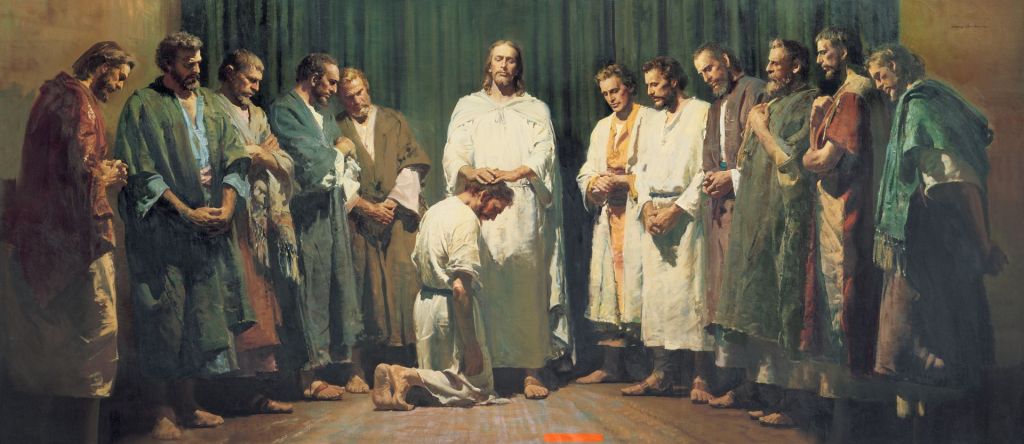
This small group are known as the Apostles of Jesus Christ, a small group of  twelve imperfect men, among the leading devoted disciples of Jesus Christ in the days of Roman Judea, without internet, without phones or radio or television or even newspapers. It was their tireless travelling to preach the Gospel of Jesus Christ and their dedication to writing letters and histories that changed the world. The truth of their impact cannot be denied by any worthy historian of note. The world of today is what it is because of their committed concern for the salvation of humanity.

Next year, America will be celebrating the 250th anniversary of the signing of its Declaration of Independence, another example of a “small group of thoughtful, concerned citizens” who changed the world. Fifty-four men who gave all they had for the cause of Liberty, pledging their lives, their fortunes, and their sacred honor.  Like the ancient Apostles, some lost their lives and the lives of family members.

American influence definitely re-focused the global political world from empire building to the concept of Liberty and Freedom of Conscience for every member of the human race in the short passage of time since the Revolution. It could be seen as the second phase of the movement led by the original Twelve Apostles, this time without regard to specific religious or political affiliation. 

The basic “small group of thoughtful citizens” is the family.  Within a self-contained, functioning family, its members learn how to work together, how to solve disputes, how to love one another, skills that are a strong foundation for leadership as members move into the larger world around them.

Can we change the world? Yes! In our homes and families, in our churches or other community organizations, the list is endless, and the causes are endless. Wherever these “small groups of thoughtful concerned citizens” gather together and focus their energies on providing solutions to problems and challenges, they will definitely change their world.

Business leader Warren Bennis said, “Every great group is an island… but an island with a bridge to the mainland.”  Reminds me of Alaska’s own Aleutian Islands, a long chain of what appear to be isolated communities connected originally by sea-faring skin boats or dog sleds on the ice in winter but now by better boats, airplanes, the internet and satellite technology.

 We don’t build our bridges to humanity the same way the original Apostles did, but we can reach out to “the mainland” in other ways not even imaginable to them. Email, mobile phones, videoconferencing, social media are the first things we think of but let’s not forget about reaching out to others in our real-world sphere of influence, those with whom we come into physical contact daily or weekly as we go about our lives, some who may share our concerns. 

Do not be discouraged as you go about trying to change the world around you.  God promises, “Fear thou not; for I am with thee: be not dismayed; for I am thy God: I will strengthen thee; yea, I will help thee; yea, I will uphold thee with the right hand of my righteousness.” (Isaiah 41:10)


Originally published in the Faith column of the Frontiersman newspaper: Changing the World

THE CHANGING OF THE GUARD

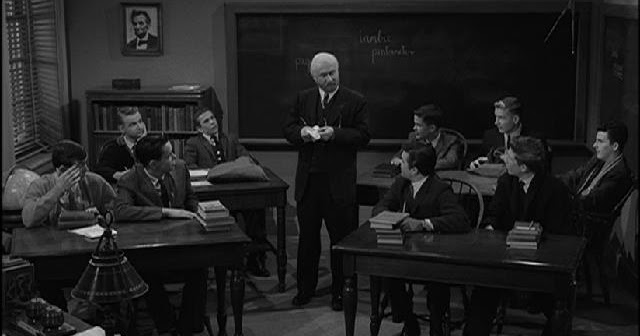
In early December I came across an episode of the old black and white Twilight Zone television series called “The Changing of the Guard” (the last episode of Season 3). I have spent a lot of time thinking about it and watching it more than once.

This story is set in 1950. An elderly professor is being retired after 51 years of teaching poetry in a boy’s school in Vermont. He begins to feel as if he has made no positive contribution to the world around him and contemplates suicide. In this state of mind, he wanders out into the snowy winter cold, with his pistol in hand. Standing before a statue of famous educator Horace Mann, he raises the pistol to his head. At that moment he hears the school bell ringing. Puzzled, he wanders into his classroom. As he stands there, he watches the ghosts of former students take their seats, many who had passed away. They share the lessons he taught them, lessons in courage, humanity, and self-sacrifice. One was a United States Marine who died on Iwo Jima during World War II, receiving the Congressional Medal of Honor. Another was the first to die in the battle of Pearl Harbor, but only after he had saved seven men trapped in a boiler room aboard a United States Navy ship. A third was a medical scientist who had offered to take x-ray treatments in an early experiment to destroy cancer cells but ended up dying of leukemia anyway. There were others who shared the morals and values they had gained from their interactions with this humble teacher of boys who became good men.

It is quite a contrast to the chaos, anger, and hatred of the changing of the guard America has been experiencing during  the 2024 presidential election season and its aftermath. We could have used a few good men and women taught by such teachers.

Having now reached Senior Citizen Status in my own right, I think more and more about the changing of the guard in my family and in my sphere of influence. Have I taught them well enough? Have I passed on the values and lesson they will need to successfully navigate through their own lives? Only time will tell, as the professor found out in his vision.

The Old Testament Book of Proverbs is filled with gems of wisdom, in particular Proverbs 22:28 when it tells us to “Remove not the ancient landmarks”.  Ancient landmarks were standing stones set up to mark boundaries.  During a time of war, the Prophet Samuel “took a stone and set it up between Mizpah and Shen and called its name Ebenezer; for he said, “Till now the Lord has helped us.” (Book of Samuel 7: 12-13).  The word “ebenezer” means “stone of help” in Hebrew and is referred to in one of my favorite hymns “Come Thou Fount of Every Blessing” (first line of the second stanza): “Here I raise my Ebenezer, hither by thy help I come.” Identifying the important landmarks of our civilization is critical to keeping the peace in any Changing of the Guard.

The first landmark is the knowledge of a Divine Creator. It is the most important landmark of Christianity, one which is the key standing stone from which all other landmarks should be measured.

The Old Testament gives us the Ten Commandments as basic laws to live by, the first three relating to our relationship with God: “Thou shalt have no other gods before me”, “Thou shalt not make any graven images (idols)”,  and “Thou shalt not take the name of the Lord thy God in vain” (Exodus 20:3 – 7).

1 Corinthians 8:6 states, “But to us there is but one God, the Father, of whom are all things, and we in him; and one Lord Jesus Christ, by whom are all things, and we by him.”

In the Church of Jesus Christ of Latter-day Saints, the First Article of Faith states, “We believe in God, the Eternal Father, and in His Son, Jesus Christ, and in the Holy Ghost.”

Did you know that 49 out of the 50 state constitution preambles mention a supreme being by one of several names for God?  This includes Alaska: “We the people of Alaska, grateful to God and to those who founded our nation and pioneered this great land, in order to secure and transmit to succeeding generations our heritage of political, civil, and religious liberty within the Union of States, do ordain and establish this constitution for the State of Alaska.”

There are other landmarks too numerous to list but these include faith, hope, charity, courage, compassion, humility, patience, and kindness.

The moral of the Changing of the Guard story is found also found Proverbs 22:6, “Train up a child in the way he should go: and when he is old, he will not depart from it”.


Originally published in the Faith column of The Frontiersman.

Photo credit 1: “Changing of the Guard” Twilight Zone television series, Season 3.

Photo credit: Stones of Stenness

The Testimony of Mushrooms

“I believe in Christianity as I believe that the sun has risen: not only because I see it, but because by it I see everything else.”  C. S. Lewis

One day last fall, during mushroom season, I decided to research the Amanita muscaria mushroom, the red ones with white raised spots, which grow so abundantly in our area. What makes such a pretty little thing so poisonous? This led me down an interesting path I call a “Thought Trek”. They are never boring journeys, rambling maybe, but never boring.

Arsenic. That’s why Amanitas are deadly, they draw up arsenic from the soil. Something called Amatoxins form and that is what makes people sick, even die when Amanitas are eaten. I began to wonder what the arsenic levels in my soil might be with the large number of Amanitas which grow each year. What about our well water? Is it safe? Why do slugs eat them and don’t seem to die? 

I also noticed that these types of mushrooms seem to be part of an ecosystem which includes spruce, birch, lichens, and mosses. Is there a bio-chemical relationship between all these plants? That required more research but for the sake of the reader, the short answer is yes. Each one plays a vital role in keeping each other healthy and happy and non-poisonous to each other. Where arsenic exists, mushrooms pull it up out of the soil, chemically transmute it so that it becomes inert (less harmful to humans and slugs apparently). Still, eating them in too large of a dose can still sicken or kill the consumer.

It is the interconnectedness of this particular mini-ecosystem in my back yard which led me to ponder on how this all happened.  There seemed to be only two ultimate questions to consider.  Question 1: did this system evolve over thousands if not millions of years?  Question 2: did an Organizing Intelligence engineer the natural laws we see in operation around us today?

I stood on my second story deck, surveying and pondering the options every day for about a month. If my ecosystem evolved, how did any of the independent species survive long enough to pass on descendants if there were no magic mushrooms to absorb arsenic? How did each know what another would need bio-chemically in order to evolve a mechanism to meet that need without dying out during the vulnerable millennia of existence?  I tried to imagine the concept of Evolution, Natural Selection, and millions of years. It’s quite a leap of faith to think that all the imperfect stages of each tree, or moss, or mushroom somehow survived until they reached the balance we see before us in our modern world.

I decided to take another leap of Faith. Is there some Organizing Intelligence responsible for all this? It is human nature to organize various pieces of things and concepts into a civilization with all its art, engineering, books, computers, and more. If we just threw the basic elements of clay or metal or amino acids into a shallow pond of water, would they eventually combine and grow into magnificent cities? Logic and reason tell us this would never happen in a million years or a trillion years. Why do we think that the basic building blocks of atoms and molecules would magically organize themselves into complicated biological organisms and systems without a triggering force? The fact that we can even think about these things implies an organized intelligence.

Back to C. S. Lewis statement “I believe in Christianity as I believe that the sun has risen: not only because I see it, but because by it I see everything else.”   My month-long pursuit of trying to figure out the connectedness of my little birch-spruce-mushroom-moss-lichen forest from an evolutionary standpoint was a failure in terms of the godless world view of the modern world. I found that, like C.S. Lewis, I can only interpret the world through the lens of Christianity, a basic tenet of which is that there is a God, by whatever name you call Him, or whatever you conceive the Organizing Intelligence to be. Nature itself testifies of this, as do we as human beings, created in His image – organized in our complex human biology, organized in our complicated thought world, and organized in relationship to ourselves and our environments.

I find the testimony of mushrooms to be a powerful one. It is my Faith and I’m sticking with it.


Letters to Editors Archive: The Loss of American Neutrality and More.

A shorter version was originally written in April of 2003 (Quincy Valley Post-Register) Please see Epilogue below for some more recent thoughts in August 2024.

J. Reuben Clark, former US Undersecretary of State and former US Ambassador to Mexico once said, “America, multi-raced and multi-national is, by tradition, by geography, by citizenry, by natural sympathy, and by material interest, the great NEUTRAL nation of the earth.”  

Today America is experiencing the results of casting aside that tradition and has become embroiled in a War that has polarized our nation and the world.  

We have lost the spirit of Lady Liberty, who holds her lamp high to symbolize to the world that there is justice, peace, and mercy available to all who would choose to abide by the principles of the Constitution of the United States of America.  

We have lowered our standard of morality.

We have made citizenship a matter of financial gain rather than of honor.

We have squandered the blood of our young men and women warring in foreign nations, nations which often turn to bite the hands that feed them.  

My solution:

Let us return to our Great Tradition of independence and liberty, of economic freedom and prosperity, of justice and mercy.  

Let us return to the original intent of the Constitution.  Let us teach the principles upon which this nation was founded – that all mankind are created with the un-alienable rights to equality under the law, of economic opportunity, and the untouchable freedoms as enumerated in, but not limited by, the Bill of Rights.

Let us remember that these gifts were bestowed upon us by a benevolent Creator, not a government, that mankind cannot usurp nor deny those rights.  

We can regain our status as the torchbearer of representative government and liberty by remembering the above quote and working towards re-establishing that government through the political process, by voting our conscience, by electing moral and just persons to public office, and by educating ourselves about the issues placed before us each election. 

The End.

EPILOGUE: Whatever our position on the issues in this current election year, we face a critical decision which will affect all our futures — good or bad, easy or hard, war or peace. Rather than taking sides and playing an “I win/you lose” game, perhaps we should try the Principle approach and a “blind test”, that is judging candidates, issues, and national policy by the following standards:

  • Does the (candidate, issue, policy) promote Liberty or Tyranny?
  • What has been the history of each (candidate, issue, policy)? Have their historical and documented actions or results promoted Liberty or Tyranny?
  • Governments do not create wealth, they redistribute the wealth of others, usually taken by threat of force through taxation. Does the (candidate, issue, policy) take more wealth or less wealth?
  • Do the (candidates, issues, or policies) promote a free-market economy (Liberty) or do the regulations exceed that which is necessary to protect the lives and liberty of consumers (Tyranny)?
  • Does the candidate represent the people he or she will serve, or do they represent their financial backers, or their own personal agenda or the agenda of their declared party?

May the candidate with the highest score get your vote and win, without regard for party affiliation or fear of the enemy. It’s the only way to start swinging the pendulum back towards the promise of American Liberty in its purest form.

Faith of Our Fathers

One of my favorite hymns is “Faith of Our Fathers.” The text was written by Frederick W. Faber in 1849. Faber was raised in England as a member of the Anglican Church. He eventually became a Vicar, then, shockingly to all around him, he left the Anglicans and joined the Catholic faith. About six years later, he wrote “Faith of Our Fathers.”

As I was reviewing this hymn a few Sundays ago, I started thinking, “what is the faith of our fathers?” My father was Free Methodist, my mother claimed Catholicism. I spent elementary school and part of junior high in Free Methodist and Baptist schools. I attended mass regularly for a while, even taking my first Holy Communion at the hands of a priest who is now a Cardinal. My grandparents were generally protestant, tending towards what is known as “Calvinism,” but I also come from ancestors who were Mennonite, Puritan, Pilgrim, Catholic, Quaker, Dunkers, and Reformed, just to name a few. I am a member of The Church of Jesus Christ of Latter-day Saints.

I have met interesting people from very different backgrounds, and various religious philosophies, or what we call “faiths.” During high school I worked at a Jewish mortuary in Los Angeles, California, and also spent time with friends in the Jesus People movement. Other friends were of the Bahai and Buddhist belief systems. Today I have a couple of friends who are Antiochian Orthodox, one of whom converted from the Mennonites.

The word “faith” has many definitions. For this discussion, I choose to use one from Webster’s 1828 American Dictionary: “the assent of the mind to the truth of a proposition advanced by another; a belief, or probable evidence of any kind.”

The first verse of the aforementioned hymn is as follows: “Faith of our fathers, living still, in spite of dungeon, fire, and sword; Oh, how our hearts beat high with joy whene’er we hear that glorious word. Faith of our fathers, holy faith, we will be true to thee till death!”

Martyrdom and persecution come to mind when I read the above stanza. A few examples that strike me are Christians burned at the stake, or otherwise abused, like William Tyndale or Jacob Hus. One of my ancestors is the Reverend Obadiah Holmes who is considered the first Baptist martyr in America. He was beaten by the Puritans for teaching a doctrine about Baptism with which they did not agree.

Another person who was persecuted is a Jewish woman I knew when I worked at the mortuary. She was a tall, slender, woman with short graying hair. She was very quiet in her temperament and always wore long sleeves, even in the southern California heat. I found out why one day when her sleeve pulled up and I saw numbers tattooed on her arm. She was an Auschwitz concentration camp survivor. Persecution and martyrdom are not selective in their choice of victims.

Verse 2 goes: “Faith of our fathers, we will strive to win all nations unto thee, And thru the truth that comes from God, mankind shall then be truly free. Faith of our fathers, holy faith, we will be true to thee till death!”

In approximately A.D. 33, Jesus Christ gave what has become known as the “Great Commission.” He said to his disciples, “Go ye therefore, and teach all nations, baptizing them in the name of the Father, and of the Son, and of the Holy Ghost: Teaching them to observe all things whatsoever I have commanded you: and, lo, I am with you always, even unto the end of the world. Amen” (KJV Matthew 28:19-20).

To my knowledge, all of the Christian faith traditions have tried to fulfill this Commission and fill the Earth with the gospel of Jesus Christ. Untold amounts of money, time, effort, and sacrifice have been expended to this end and continue to be expended, indeed, even to death itself. What an amazing accomplishment!

Verse 3: “Faith of our fathers, we will love both friend and foe in all our strife, And preach thee, too, as love knows how, by kindly words and virtuous life. Faith of our fathers, holy faith, We will be true to thee till death!”

Admittedly, some who claim Christianity as their faith haven’t lived up to the standard set by Jesus Christ in Matthew 5:1-12, a passage of scripture known as “the Beatitudes,” but more—oh so very many more!—have successfully lived those principles or died trying.

As we go about our lives as Christians, let us remember to be more humble, to comfort those that mourn, to be meek, to seek righteousness, to be merciful, to be pure in heart, to be peacemakers, and to remember that Jesus also said, “Thou shalt love the Lord thy God with all thy heart, and with all thy soul, and with all thy mind. This is the first and great commandment. And the second is like unto it, Thou shalt love thy neighbor as thyself. On these two commandments hang all the law and the prophets” (KJV Matthew 22:37-40).

This is what Jesus taught us, and this is the “Faith of Our Fathers.”

(This was originally published in the Faith column of The Frontiersman newspaper in Wasilla, Alaska: Faith of our Fathers.)

SIMPLE GIFTS

Recently I took a moment to read “The Living Christ” a proclamation to the world from the Twelve Apostles and First Presidency of the Church of Jesus Christ of Latter-Day Saints.  I didn’t get far.  The passage below stopped me in my tracks and left me with the thoughts in the following article. 

Speaking of Jesus Christ: “Though sinless, He was baptized to fulfill all righteousness.  He “went about doing good” (Acts 10:38), yet was despised for it.  His gospel was a message of peace and goodwill.  He entreated all to follow His example.  He walked the roads of Palestine, healing the sick, causing the blind to see, and raising the dead.  He taught the truths of eternity, the reality of our premortal existence, the purpose of our life on earth, and the potential for the sons and daughters of God in the life to come.”

FULLING ALL RIGHTEOUSNESS

  • Jesus Christ was baptized to fulfill all righteousness.

As members of the Church of Jesus Christ of Latter-day Saints, fulfilling all righteousness would be our active participation in all the ordinances of the Gospel, including those of the Temple.

DOING GOOD

  • Jesus went about doing good and was despised for it.

As members of the Church of Jesus Christ of Latter-Day Saints, doing good includes the huge number of hours and millions of dollars spent each year in serving others through humanitarian outreach. Most of the time it is appreciated by those who directly benefit.

One example of this is the gentleman I met while attending a political gathering in the Columbia Basin area of Washington State. The religious affiliation of attendees was asked about during the meeting and I was the only member of the Church of Jesus Christ of Latter-day Saints. Later, this quiet soft-spoken older gentleman came up to me and said he would like to thank the Church through me for the food baskets they had contributed to the Salvation Army the previous winter. He said we were the only organization to help them provide meals to their people in need. Another man I knew happened to pass by while the first man and I were talking. The second man proclaimed that while the Mormons can be helpful, he personally thought their doctrine was bad. Neither the first man nor I made any response, as he walked away. The first man just shrugged his shoulders, puzzled at the outburst, and went on talking about the food baskets. I did pass this on to the stake president so he would know the real world impact of the quiet donation of food baskets one winter in Washington State.  It is a valid principle that you may know the truth of people by the fruits they bear.

There are members, as well as those outside the Church, who “despise” the Church for having monetary resources to do such outreach, saying that we are not doing enough or are “hiding” income. Yet savings and investment are common sense practices for both individuals and organizations.  No one is becoming a millionaire through personal use of church funds.  Most people who receive a wage from church coffers consider it a stewardship to be handled wisely. 

Here is the church statement on one of these recent controversies.  Church Statement on SEC Settlement (churchofjesuschrist.org)

PEACE AND GOODWILL TO ALL MEN

  • The true and everlasting Gospel of Jesus Christ has always been about Peace and Goodwill to all.

At the birth of Jesus Christ, the blessing of Christ to the world was announced: “Glory to God in the highest, and on earth peace, good will toward men.” (Luke 2:14, KJV).

As members of the Church of Jesus Christ of Latter-day Saints, He has asked us to follow him, and we should always seek the path of peace and goodwill as a sacred stewardship in all our dealings with Mankind, beasts, and Mother Earth.

WALKING THE ROADS OF PALESTINE

  • Jesus Christ didn’t seek out extraordinary situations to display His power, instead He went about his daily life seeking to serve those he encountered along the way.

As members of the Church of Jesus Christ of Latter-day Saints, we don’t need to wait for organized service projects, though these are a great way to help others. It is through our daily natural encounters that we can help change the world one person at a time.  I have often had experiences where that is exactly what happened because I was in the right place, at the right time, and met the right person while going about my normal business.

HEALING THE SICK

When we hear this phrase, we often think in terms of physical illness, but there are many more types of illnesses. Our minds may be troubled, our spirits may have been damaged by abuse of all kinds, our hearts may be so heavy we feel like we are only dust to be blown away into nothingness by the next strong wind of woe.

As members of the Church of Jesus Christ of Latter-day Saints, we should try to be open to the possibility that behind sweet faces or poor behavior there may be a soul in pain, and we should open ourselves to the influence of the Holy Spirit in knowing what to say or where to lead others seeking help. Sometimes healing the sick can mean healing our own souls as well.

CAUSING THE BLIND TO SEE

The greatest blindness in the world today is not that of the damaged eye, it is that of the damaged soul.

Too many people have been blinded by deception, by the manipulation of others, by their own selfishness, by the lack of exposure to the truths of the Gospel. Missionary work, friendship, kindness, understanding, and quietly teaching consistent principles can open spiritual eyes and empower others to move forward in their spiritual journey.

RAISING THE DEAD

Physically, not one of us can actually raise the dead unless the Lord wills it and through His power.

We can, however, raise the dead through Family History research. When we passed through the veil into this mortal life, we lost our memory of our previous life. When we pass through the veil out of this mortal life, the memories others have of us fade into obscurity with each passing generation. Family History research brings the dead back to life by restoring and preserving as much of their lives, and our own lives, as possible.

Why is this important? Those living in the present cannot truly know who they are, why they are here, and where they are going, if they do not know where they have been and how they got where they are in their life. Many lessons of history have to be repeated because we no longer have generational memories of events, places, and persons who shaped not only our physical lives, but our spiritual, emotional, intellectual, creative lives as well. Genetic research is beginning to show how this is a very real process happening within our DNA. 

Recording and examining the lives of the dead raises them to the awareness of the living and allows the living to study lessons learned in the past in order to build a better future. One of my favorite movies exploring this theme is Disney’s “Coco”.  If we erase the past, good and bad, we erase the potential for a better future.

The history of the world is the history of the family of Man. Understanding our place in that family is essential to both the healing of individuals and to overcoming the blindness of cultural traditions which can enslave us.

ETERNAL TRUTHS and OUR PREMORTAL EXISTENCE

An eternal perspective on life – that life existed before mortality, that life exists now, that life will exist after mortality, is essential to happiness. Earth life is hard. Earth life has many choice, some good, some bad, some better, some worse. For members of the Church of Jesus Christ of Latter-day Saints, the choice is often between what is good and what is celestial. We can help others heal from the wounds of life by teaching them eternal truths, “line upon line, precept upon precept”. And as God’s way is one Eternal Round, the more we help others heal, the more we are healed.

OUR PURPOSE and OUR POTENTIAL

In these times of confusion and chaos, of wars and rumors of wars, many of our brothers and sisters have lost their identity as sons and daughters of Heavenly Parents. Daily news reports show the results of this.  The ranks of the disillusioned and suffering grow each day.  It is time for members of the Church of Jesus Christ of Latter-day Saints to be examples of the righteous principles of male and female, father and mother, sister and brother, husband and wife, parent and child, unabashedly and unashamed in their daily lives.

Becoming like Christ means to follow the path he set before us:  Stand firm, speak with a quiet strength, hold out the hand of the peacemaker without compromising that which we know in our hearts to be true. This is the path of healing ourselves and the world around us.  All the rhetoric of the world is nothing without the foundation of eternal principles and the example of Jesus Christ.

May your pathways be peaceful today!

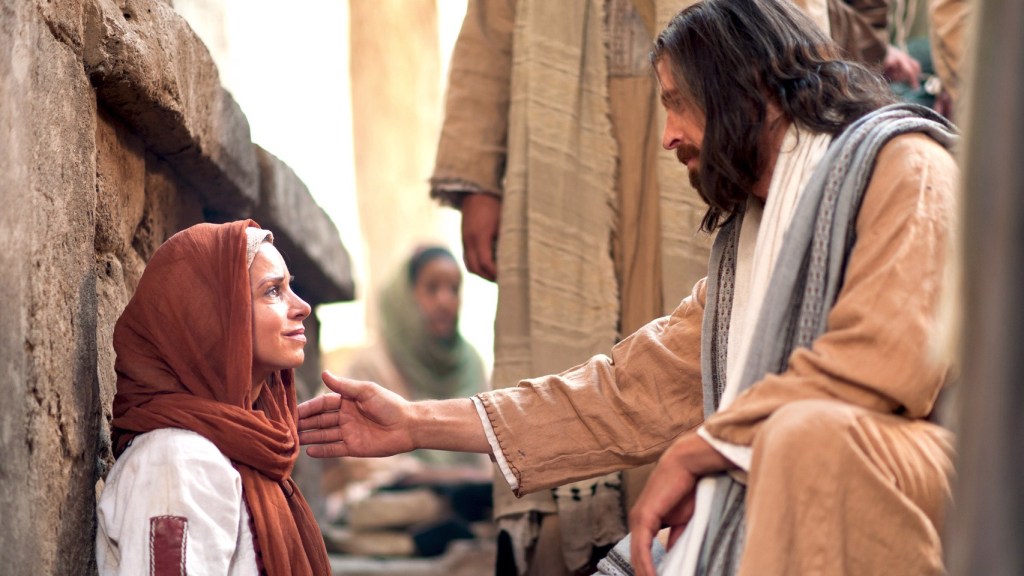
Photo credit “Jesus Heals a Woman of Faith” http://www.churchofjesuschrist.org.

TESTIMONY AND THE BALLOT BOX

Bearing witness is an essential component of being a citizen, whether a citizen of a religious society or a citizen of a country or a nation. Every aspect of life relies upon either the testimony of others or the testimony of our own observations and experiences.

It’s that time of year again, Election Season, time when everyone seems to lose their minds.  Vote for me, I’ll keep the world safe with war – war on drugs, war on the climate, war against anything or anyone you don’t like.   No, No, vote for me and I’ll make sure you have anything you want; we’ll just print more money and tax anyone who have more than you until no one has more than anyone else, a true utopian society.  But wait, wait, wait, vote for me and I will set you free – get out of jail free (no matter what your crime), free from accountability when you run amok in the streets rioting and looting, free of all those people with pesky opinions you don’t like, we’ll lock them up instead!  Honesty and Integrity become a rarity, Propaganda overtakes reason and fills the airwaves instead of hard facts and accurate reporting.  Calgon, take me away!

(Cut away from the chaos of the modern world to my quiet office overlooking the woods somewhere in rural Alaska…)

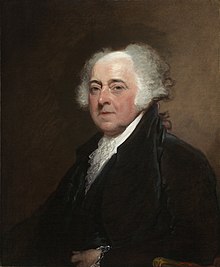
There is one thing that brings peace to an election troubled mind – – knowledge that is a better way, if we just open our minds to the idea that virtue and principles matter in America’s Constitutional Republic.  John Adams, second president of these united States of America, said “Our Constitution was made only for a moral and religious people.  It is wholly inadequate to the government of any other.”   He has a lot to say on the matter.  You can read more of his quotes here.

What is morality?  In Noah Webster’s 1812 American Dictionary of the English Language, morality is defined thus, “The doctrine or system of moral duties, or the duties of men in their social character; ethics.”  Ethics is defined as, “The doctrines of morality or social manners; the science of moral philosophy, which teaches men their duty and the reasons of it.”  Finally, religious can be defined in many ways, but in applying it to America’s constitutional republic, I believe it means “Exact; strict; such as religion requires” in upholding the moral and ethical foundations of that republic.  One of the basic moral foundation stones is the concept of Rights and Duties.

Rights and Duties

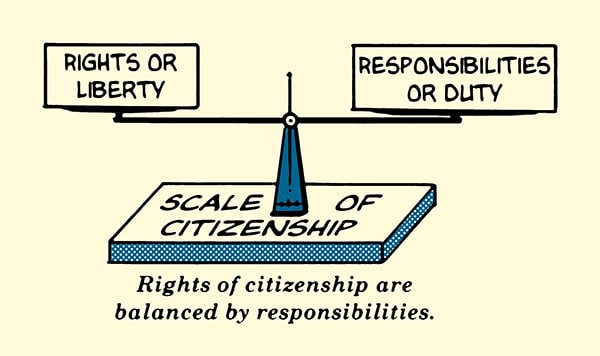
For a few years, I was blessed to teach the basics of the Constitution to elementary school-age children during the annual Constitution Week, as required by education laws in Washington State.  One of the most important interactions occurred when I had three or four children come up and hold some signs with the name of a “Right” on one side and the corresponding “Duty” on the other.  Most of the children clearly understood about Rights, as children do – “I have the right to my room”, “I have the right to my toys”, “I have the right to eat”, etc., but Duties are harder — “I have the duty to keep my room clean, “I have the duty to take care of my toys”, I have the duty to help prepare meals or to wash the dishes.”   In regard to the Constitution, we would talk about the Right to a Jury Trial, for example, and the subsequent Duty to Serve as a Juror.  If you expect a good, intelligent jury to judge a case you might be involved in, then you have the Duty to be such a juror for someone else.    Or perhaps, you want the Right to worship God according to your own conscience, then you have the Duty to allow others the same privilege.  And so on . . .

The Right to Vote is no different.  It also has an attached Duty.

Voting is a Sacred Duty

As Americans who are used to a lot of free speech and complaining about this or that all the time, we tend to forget that free speech and the ability to actually have a voice in our republic are blessings which most of humanity throughout history has not had the privilege of experiencing.  Indeed, many peoples in the world today do not have that privilege.  It is a Duty that we, as Citizens of the American Constitutional Republic should exercise wisely.

Most politics these days is gamesmanship, seeing who can win or lose at all costs, telling whatever lies and deceptions are necessary to win over the “enemy”.  It is all about the game and very little about what is moral or ethical.  The lie is perpetuated that the government will give you this right or that right, or this benefit or that benefit, without considering any facts or any consequences.  Fear and hatred of the opposition becomes the motivating factor and the spiral downward to lesser and lesser moral and ethical choices has let us to the chaotic, warlike rhetoric and behavior seen in the current Election Season.  It’s time for a real change.  It’s time to return to a sense of Duty based upon principle rather than personality.  It’s time to learn that voting is really a Sacred Duty to ourselves, and our posterity for generations to come.

Voting is a form of “Bearing Witness” and a “Testimony”

Because I feel I have a Sacred Duty to vote, I feel I must do my due diligence to make sure that the candidate in question meets the moral and ethical standard required to serve his or her constituents in the American Constitutional Republic.  You will probably have your own dream list for a candidate, but here are some of the things I look for:

  • Do they understand the concept of a constitutional republic and are they committed to it?  Do they understand the Law of Sovereign Liberty and are willing to defend it?
  • Do they have a record of keeping oaths and covenants, that is, have they shown integrity in their business and personal life? No legal entanglements or history of criminal behavior?  Keeping their marriage vows? Have they served in the military or volunteered to serve others, either personally or in an organization?
  • Are their core principles in line with the principles of the Declaration of Independence, the U.S. Constitution, and the Bill of Rights? Are their core principles in line with their state constitution?
  • Have they shown fiscal responsibility in their personal life?  Are their proposals for change fiscally responsible?
  • Do they believe that people are first self-governing, and that the state and federal governments support the people in their efforts to provide for themselves rather that regulate him or her out of business with overbearing rules and policies?
  • Do they believe that the proper role of government is to protect rights and that government has no power to either bestow rights or prevent the free exercise of rights unless those rights are used to harm others or to commit a crime?
  • Recognizing that no one is perfect, does the candidate show an ability to learn from mistakes and move forward once an error is pointed out?
  • Does the candidate have experience with organizational or business budgeting and financial decisions?  Do they know how to be fiscally responsible?
  • Do they care about serving the people in their district or do they only care about serving themselves and their future ambitions?

Once these questions are answered, I am ready to fill in the circles on my ballot.  When I do, I am bearing my witness that the candidate I have chosen meets most of my criteria and that I feel confident they will do their best to serve wisely.  I am also testifying to my children and grandchildren that I have lived up to my Duty as a Citizen to delegate a limited portion of the sovereign authority invested in by virtue of my birth on this planet, trusting that that candidate, when elected, will work to preserve and maintain their future liberty, as well. If not, I will work to remove them from office at the next election or by a call for his or her resignation, showing just cause for doing so.

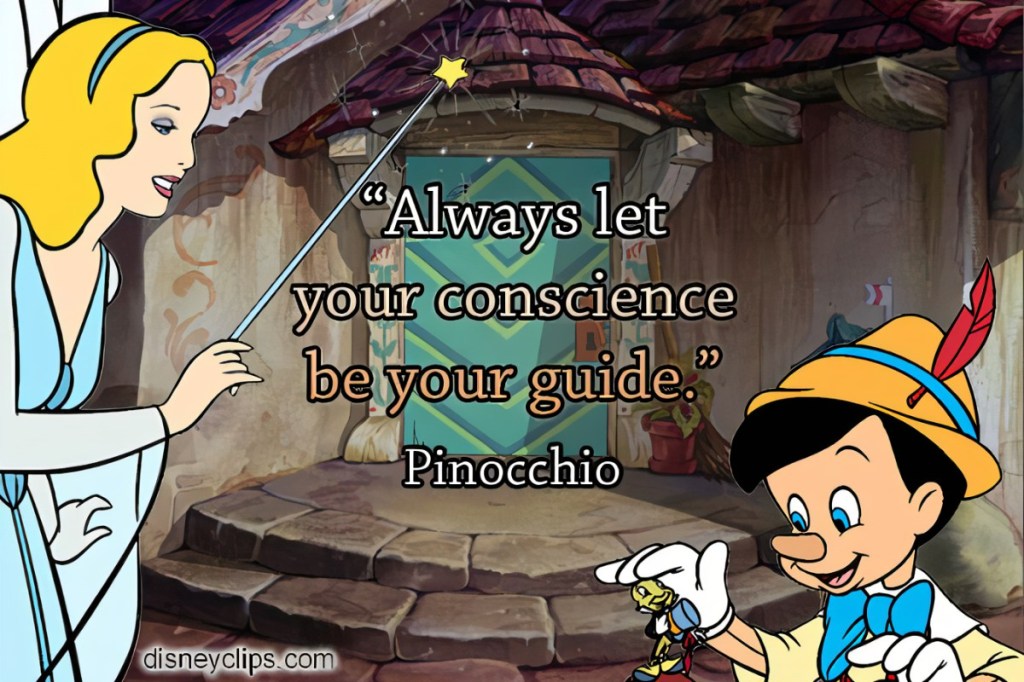
Always Let Your Conscience Be Your Guide

As I child, my first understanding of following my conscience came from the song sung by the character of Jiminy Cricket in Disney’s animated classic “Pinocchio”.  The Blue Fairy give the wooden puppet Pinocchio a conscience and Jiminy Cricket is always there to remind him to do so. 

Ranked Choice Voting is not a conscientious option for me.  In my mind, the best possible choice is still the best possible choice.  Diluting the best possible by spreading votes over lesser qualified candidates will only result in a continuation of the downward spiral, and the dumbing down of the American Constitutional Republic.  All candidates are not equal in terms of their qualifications or commitment to protect the Rights of the People against the government they wish to be a part of. Nevertheless, I believe God gave us the freedom to choose in the Garden of Eden.  What each of us may choose to do with that choice is ultimately between He and Me or He and Thee. 

What Do I Do if No Candidate Meets My Criteria

In the event that my conscience will not allow me to vote for any candidate listed, I choose to write in the name of some one I do trust, or I write “none of the above”, or I simply leave it blank.

John Adams also said, “Government is instituted for the common good; for the protection, safety, prosperity, and happiness of the people; and not for profit, honor, or private interest of any one man, family, or class of men; therefore, the people alone have an incontestable, unalienable, and indefeasible right to institute government; and to reform, alter, or totally change the same, when their protection, safety, prosperity, and happiness require it.”

May you be blessed with a clear mind as you make your own decisions this year and always let your conscience be your guide.

Ranked Choice Voting and the Constitutionist

A great experiment is taking place in Alaska this election season. Ranked Choice Voting (RCV) is being promoted as giving a greater voice to all political perspectives. All votes will count, they tell us, but the actual outcome will be no different than the traditional non-ranked voting. Principle will succumb to expediency, and the same fear that the enemy is going to win will determine the outcome.

Winston Churchill said, “You may take the most gallant sailor, the most intrepid airman or the most audacious soldier, put them at a table together – what do you get? The sum of their fears.” 

Elections in America are the same. Two party voters often make choices based on the sum of all their fears:  Republicans fear Democrats taking power, Democrats fear Republicans taking power. Each person self “ranks” his or her own choice in primary election by who they think has the best change of defeating “the enemy,” even if the candidate chosen does not share the same principles as the voter.

Alternative party or independent voters, tend to choose candidates based on principle, in spite of the fact that their chances of winning are greatly diminished by the Fear Factor of the two-party voters.

What is Ranked Choice Voting?

In traditional voting, the voter selects one candidate in each category and whichever candidate get the most votes is then elected to serve a particular office.

Ranked Choice Voting in Alaska provides primaries in which the top four vote getters move on to the general election. The voter ranks the candidates first, second, third, or fourth out of an unknown number of certified candidates. On the first round of voting, if no single candidate has achieved 50% plus one number of votes, then the least vote-getting candidate is eliminated and his or her votes go to the third choice of the individual voter. This creates the second round.  The process continues with the lowest vote getter being eliminated and re-distributed until one candidate eventually achieves a majority.  The hope is that this candidate will have been selected in such a way that will unify the majority of the electorate, as well as opening the door for segments of the population who often feel dis-enfranchised by the current system to feel that they had a voice in the election.

For the Constitutionist voter, however, RCV continues to subdue their voice because it does nothing to correct the unconstitutional two-party election system currently operating in America, nor the mindset of the average voter who has been conditioned to believe that this is how it has always been and will always be.

The Constitutionist Ranked Choice Voting System

Voters, like myself, who support a return to the original intent of the Constitution of the united States of America, have their own version of RCV.  We rank each individual candidate by the principles they espouse rather than party affiliation before we even get to the ballot box.

  1. Is the candidate legally qualified by federal and state law to hold the office in question?
  2. Does the candidate seem to know and understand the principles and guidelines found in the federal Constitution and in their respective state Constitution?
  3. Does the candidate appear to have integrity and honor in his or her personal and professional life?
  4. Does the candidate seem to have the knowledge of how governmental organizations operate? (Robert’s Rules of Order, the legislative process, etc.)
  5. Does the candidate understand that the Constitution restricts and limits the actions of lawmakers to specifically defined powers?
  6. Does the candidate understand that the Constitution protects the rights of the people, who hold all natural rights within their persons, and that the Constitution does not bestow rights because it does not have the power to create rights?
  7. Is the candidate committed to his or her oath of office, that is, to support the Constitution, and are they willing to be held accountable to that oath by their constituents?
  8. Is the candidate willing to defend the Constitutionally protected rights of his or her constituents against encroachment by other elected officers or through the legislative and regulatory processes?

Once these boxes in the Constitutionist’s personal Ranked Choice Voting test is done, then we can look at more specific issues for further refinement of our choice.  Each Constitutionist decides which items are of more importance to his or her conscience and ranks accordingly. The Constitutionist sees his or her vote as a sacred duty and stewardship to preserve liberty for future generations.

Finally, the Constitutionist will choose only the candidates who meet the criteria above. If that is only one per election, then one it is, for it is the principle that matters in the long term. Sometimes the Constitutionist might have to select “None of the Above”, if that is an option, or not cast a vote for any of the candidates. Voting for the lesser of two, or three, or four candidates, will only net the voter lesser candidates, not greater.

Tips

Whatever method you choose to vote or to rank the candidates, don’t forget to check out the official write in candidates, as you may find a great candidate among them.

Voting your conscience will not only help you sleep better knowing you made the best choice you could, it will also lift you up out of the political street battles which rage on social media and television news programs.  You will be able to see the issues more clearly and see what the best solutions might be, when your sight is no longer blurred by the fog of political rhetoric.

Do your homework.  Researching candidates and issues has never been easier in the history of the world.  Take advantage of it.

Support your chosen candidate with a nice note or a contribution. Running for office is difficult and can be expensive.

Finally, remember Fear is not a Factor when Faith and Commitment prevail.


This Constitutionist’s Pre-Ranked Vote Choices for the 2022 Alaska Primaries:

U.S. Representative: Chris Bye, write-in (www.itstimealaska.com)

U.S. Senator: Karl Speights (https://karlspeights4alaskaussenate.com/)

Alaska State Senate, District N: Scott Clayton (https://www.claytonforaksenate.com/)

Alaska State Representative, District 27: David Eastman (https://davideastman.org/)

An Open Letter to My U.S. Senator Re Abortion, Rights, and Our Own Bodies

Amen. Truth spoken boldly and without fear. I especially like the discussion about men and women being equal co-partners in the DNA of the unborn child and, therefore, the father should have an equal duty (as protector of his progeny) and equal culpability in determining the life or death of the child. The author’s take on the constitutional issues involved is spot on, and the final paragraph sums up the true nature of choice over “one’s own body” in the list of violations of such by all levels of government. Thank you to Robert Peck for taking the time to write it all down for posterity.

Robert W. Peck's avatarPerspective

Dear Senator Murray:

In a recent email to your constituents addressing what you call the “right to abortion,” you ask, “do you support a woman’s right to make her own decisions about her own body?” I regret that I cannot answer that question with the simple “yes” or “no” requested as the way it is presented constitutes a false premise.

The trouble is that we’re not talking about the woman’s “own” body, but another body that happens to be inside the woman at the time. This is a body with its own unique DNA that is distinctly different from that of the woman and therefore is clearly not the woman’s “own” body. The body we’re discussing aborting has its own genetic markers that distinguish it from the woman’s body as certainly as if a car parked in my driveway had a VIN number different from the one I hold title…

View original post 687 more words

Librarium: Thoughts on The Great Apostasy by James E. Talmage

First published in 1901, this book is a well-researched and aptly presented review of the history of what is known as “The Great Apostasy”, a time period in which it is said that the purity and simplicity of the Doctrine of Christ as established by Jesus himself during his sojourn and ministry in mortality became corrupted.

The time in which Jesus established his Church is known as the “Meridian of Time, not necessarily an exact division of physical time, but a historical division between the Garden of Eden and what is known as the Millennium. From the Garden of Eden (Adam) to the Great Flood (Noah), to the establishment of the Abrahamic Covenant to the Meridian of Time (First Coming of Christ), to the Great Apostasy followed by the Restoration of the Fulness of Times (Joseph Smith), to the future Millennial period (Second Coming of Christ). These are the markers of historical time.   To simplify: life on earth can be seen in stages of Pre-Flood (when the Promise of Christ was established), Meridian (when the Promise of Christ was fulfilled), and the Millennium (when the Kingdom of God under Christ’s reign will be actualized for this planet).  My personal belief is that we are in the early Millennial stage.

Since the founding of the nation in 1776, life as we know it during the early 2020’s, life has become more globalized and more tyrannical than we in America could ever have imagined.   Before now, various powers have wielded the sword of conquest over the heads of pre-existing nations, but not even the tyranny of Rome (in the Old World) and Spain (in the New World) will be able to rival what we will see before the Second Coming of Christ ushers in the full global governance of the Millennium.  Something for another essay, at another time.

The societal traumas of pandemic, war, poverty, crime, etc., have led to a spiritual discontent and a tendency to cast off everything of the past in a search for something unknown in the future that might be better, but history has shown us that these fearful times always lead to the tyranny of state control rather than the freedom and commitment to the principles of Liberty which have always provided a way to light our way through the darkness and out of chaos.  Again, another story for another day.

There are always evil, self-serving people who take advantage of these situations, both in and out of political, educational, and  religious institutions.   This was the situation in the ancient world which led to the Great Apostasy in the Christian church.   James Talmage gives us some insight into what corrupted the pure doctrine of Christ, why it happened, and the societal consequences.  I’ll discuss three of his main points, and these are the three things which I need to carefully consider in my own life and religious choices.  If God is the same yesterday, today, and forever, then learning His true doctrine and doing one’s best to live the revealed principles will lead to the best chance of living in a manner which provides blessings for oneself and for others, and to maintain the consistency that should exist in a simple system of belief that purports to be eternal in its existence.  It also means knowing the path of deviation from that doctrine, and how to avoid it.

“The corrupting of simple principles of the gospel by admixture of the so-called philosophic systems of the times.”[1]

Originally, the gospel spread only among the Jews.  Revelation given to Peter soon brought the gospel to the Gentiles (or pagans) as well.   Both Pagans and newly converted Jewish Christians tried to blend and bend Christian doctrine and practices into previous religious traditions.   As Talmage points out (quoting Christ), “No man, said He, putteth a piece of new cloth unto an old garment, for that which is put in to fill it up taketh from the garment and the rent is made worse.  Neither do men put new wine into old bottles; else the bottles break and the wine runneth out, and the bottles perish: but they put new wine into new bottles, and both are preserved.” (Matthew 9:16,17).

In our own day, we have been counselled to put aside the “traditions of our fathers”, if they are inconsistent with the principles of the Gospel.  It is a very difficult to “set aside the things of the world”, especially those which have been deeply ingrained into our cultures and societies for generations.   It is very easy to fall into complacency and embrace the philosophies of the world when everyone is doing it and may mock those who choose a different path.  In the Meridian of Time, it was the traditions of Judaism which had corrupted both the Abrahamic Covenant and the Mosaic Law.  Followers of Gnosticism worked to merge their teachings with Christian doctrine.  Platonic concepts of God became mixed with the Christian concept of God, leading to false doctrine and bitter conflicts concerning the nature of the Godhead.

Today the battle between the philosophies of Men and the doctrine of God grows ever stronger as we contend with controversies on the very nature of male and female, of the central role of the natural family in stable communities, of societal norms and cultural traditions which distort not only basic moral law, but also God’s Law of Liberty for both individuals and society at large. 

If we are to bring the Light of Christ to all nations, kindreds, tongues, and people, we need to weave new cloth — using the warp of the Restoration and the weft of Personal Revelation. We need to weave the textures and patterns of a Zion society into the fabric of our daily lives and remove the old worn-out textures and patterns of the philosophies of Man, first as individuals and families, then as influencers in our communities.

“Unauthorized additions to the ceremonies of the Church, and the introduction of vital changes in essential ordinances.”[2]

The Great Apostasy saw the beginning of several controversies, which still continue today.  Wars have been fought over these issues, the ordinance of Baptism being one of the most important.   Baptism by immersion, baptism by sprinkling, infant baptism (christening), or baptism of adults only….” What should we do?”, our religious ancestors asked themselves.  The Baptist sect of Protestantism was founded on this very issue.  Other sects have taught that baptism is not necessary for salvation.  In the Meridian of Time, Christ set the example of baptism by immersion by one having the authority of the Aaronic priesthood when he was baptized by John, who became known as John the Baptist.  Adam and Eve, Enoch, and others who lived before Christ, taught and practiced baptism by immersion.[3] The fullness of this ordinance was lost during Apostasy era, and has now been restored by the Prophet Joseph Smith in 1829[4], thus re-establishing the continuity between times past, times present, and into the future.

Our awareness of the history of the ordinance of Baptism[5] can help us prevent a second Apostasy, both in our personal lives and in the body of the Church.

There are other “essential” ordinances. The word “essential” is defined by Noah Webster (1812 dictionary) as something that is “necessary to the constitution or existence of a thing”; and “important in the highest degree”.  The following are those ordinances which are considered to be “essential” to salvation: Confirmation, Priesthood Ordinations and Setting Apart, Administering to the Sick, and Administering the Sacrament.  Specific instructions[6] for each ordinance have been restored, to which Latter-Day Saint Christians should strictly adhere in order to prevent apostasy.

Baptism is just one example of the many changes which were made by the 4th century A.D.  Talmage examines more of these in Chapter X.

“Unauthorized changes in Church organization and government.”[7]

“The principle of self-government, or common consent, was respected in apostolic days with a care amounting to a sacred duty”.[8]

From the initial establishment of local congregations, through the 2nd century A.D., each were independent of the others, without any sort of coordinating body overseeing them.  “Each Christian assembly was a little state, governed by its own laws, which were either enacted, or at least approved of, by the society.[9]   Talmage details the development of a universal church and the pontificate that later emerged in Rome.  I highly recommend reading it, for the history of the rise of apostate Christianity is the history of Western Civilization, a basic understanding of which is necessary to understanding it’s wars and contentions, it’s Crusades and other societal conflicts.

The Restoration of the fulness of the gospel in our time, from 1830 A.D onward, has seen many authorized changes – from independent congregations coordinated by a prophet, later the Quorum of the Twelve, to the global establishment requiring a central authority working with the governments of the earth in order to open doors to the preaching of that gospel, the tension between local control and central control is always a sensitive balancing act.   The recent pandemic crisis is a case in point.  

Governments were not consistent in their policies.  In America, state policies regarding masking or gatherings or vaccinations were neither clear nor consistent.  How can the Church of Jesus Christ maneuver through the muddy waters of individual rights, governing authority so the greater part of the people will have guidance?  I think we began to see the light, when the responsibility for such decisions was returned to local authority, with bishops and the ward councils deciding if cancelling meetings or mask mandates were the best way to meet the needs of their congregations.   One way to avoid a general church Apostasy, is to return to the ideas of self-government and local autonomy in matters specific to conditions in various geographical and political locations, while still maintaining communication and adherence to the actual doctrine of the Gospel, rather than establishing policies, which may or may be applicable in all areas of a global church.  We live in a day and time with such great technical advantages in the field of communications, unimagined in the times past, that this balance can actually be achieved as we build Zion among every nation, kindred, tongue, and people.

Final Thought:

In my opinion, knowing the history of the Great Apostasy will go a long way towards preventing the tendency of Mankind to desire to create a Church in his own image, rather than in God’s image.  Books such as The Great Apostasy can enlighten our minds and strengthen our commitment to preserve and protect the purity of the restored Gospel of Jesus Christ.  It is widely available at Amazon, Barnes & Noble, Deseret Books, and other similar outlets.


[1] Discussed in Chapter VII, pages 96 – 112: The Great Apostasy; Talmage, James E.; 1973 edition, Deseret Book Company.
[2] Discussed in Chapter VIII, pages 113 – 129: The Great Apostasy; Talmage, James E.; 1973 edition, Deseret Book Company.

[3] Woodford, Robert J.; How Much Do We Know About Baptism Before Christ’s Time?, article in July 1991 Ensign magazine.

[4] The Authority to Baptize; https://history.churchofjesuschrist.org/content/the-authority-to-baptize?lang=eng

[5] Baptism and the Gift of the Holy Ghost; https://www.churchofjesuschrist.org/study/manual/teachings-joseph-smith/chapter-7?lang=eng

[6] Priesthood Ordinances and Blessings; https://www.churchofjesuschrist.org/study/manual/principles-of-the-gospel/priesthood-ordinances-and-blessings?lang=eng

[7] Discussed in Chapter IX, pages 130 – 149: The Great Apostasy; Talmage, James E.; 1973 edition, Deseret Book Company.

[8] Chapter 11, page 131: The Great Apostasy; Talmage, James E.; 1973 edition, Deseret Book Company.

[9] Chapter 11, page 131: The Great Apostasy; Talmage, James E.; 1973 edition, Deseret Book Company.