CHANGING THE WORLD

“Never doubt that a small group of thoughtful, concerned citizens can change the world. Indeed, it is the only thing that ever has.” -- Anthropologist Margaret Mead, 1901-1978

The recent death of Pope Francis took me down memory lane to my junior high years when I joined the Catholic Church for a time. The man who gave me my first Holy Communion was Archbishop Timothy Manning of Los Angeles, California. Later he became a Cardinal serving as cardinal-elector during two conclaves which selected two different Popes – John Paul I and John Paul II. He passed away in 1989.

I loved my time in the Catholic Church. I visited various types of nunneries, pondering how I could best serve God. One of the most spiritual weekends I had as a teenager was during a school field trip to a monastery in Valyermo, California. In spite of such positive experiences, I chose another religious path in adulthood for various reasons.

Even though I didn’t remain in the Catholic faith, one thing is self-evident: over two thousand years of history and the lives of perhaps over a billion people globally have been influenced by its teachings and actions. European political and religious history felt its guiding force for good or ill, spilling over into the Americas and beyond beginning in the 1500s.  In fact, the first physical Christian church to be built in what would eventually become the United States of America was the Catholic San Miguel Mission church founded in 1610 in the area now known as Santa Fe, New Mexico.

The movement which became the Catholic Church of today, has had many branches, known by many names and in many nations.  Orthodox Christianity, Protestant Christians, Congregationalists, Baptists, Non-Denominational Christians, Hutterites, Amish, countless names and countless generations – all have their root in one of Margaret Mead’s small groups of “thoughtful, concerned citizens” who, indeed, changed the world.

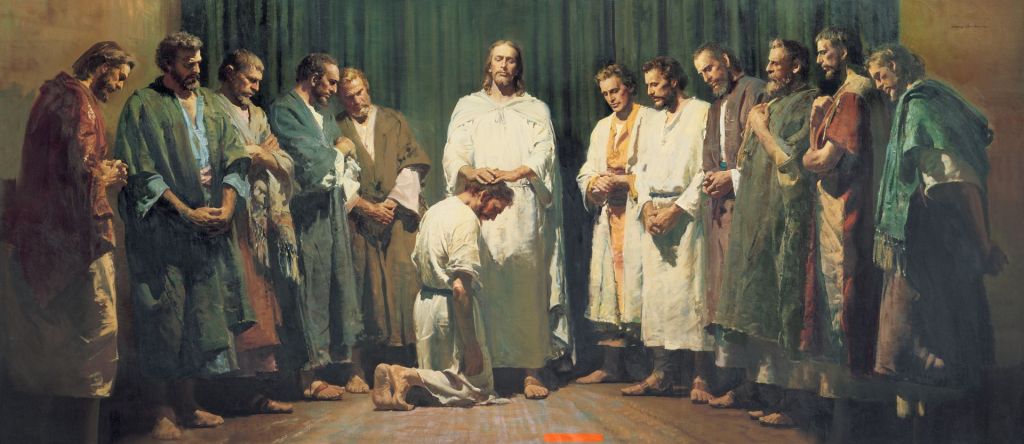
This small group are known as the Apostles of Jesus Christ, a small group of  twelve imperfect men, among the leading devoted disciples of Jesus Christ in the days of Roman Judea, without internet, without phones or radio or television or even newspapers. It was their tireless travelling to preach the Gospel of Jesus Christ and their dedication to writing letters and histories that changed the world. The truth of their impact cannot be denied by any worthy historian of note. The world of today is what it is because of their committed concern for the salvation of humanity.

Next year, America will be celebrating the 250th anniversary of the signing of its Declaration of Independence, another example of a “small group of thoughtful, concerned citizens” who changed the world. Fifty-four men who gave all they had for the cause of Liberty, pledging their lives, their fortunes, and their sacred honor.  Like the ancient Apostles, some lost their lives and the lives of family members.

American influence definitely re-focused the global political world from empire building to the concept of Liberty and Freedom of Conscience for every member of the human race in the short passage of time since the Revolution. It could be seen as the second phase of the movement led by the original Twelve Apostles, this time without regard to specific religious or political affiliation. 

The basic “small group of thoughtful citizens” is the family.  Within a self-contained, functioning family, its members learn how to work together, how to solve disputes, how to love one another, skills that are a strong foundation for leadership as members move into the larger world around them.

Can we change the world? Yes! In our homes and families, in our churches or other community organizations, the list is endless, and the causes are endless. Wherever these “small groups of thoughtful concerned citizens” gather together and focus their energies on providing solutions to problems and challenges, they will definitely change their world.

Business leader Warren Bennis said, “Every great group is an island… but an island with a bridge to the mainland.”  Reminds me of Alaska’s own Aleutian Islands, a long chain of what appear to be isolated communities connected originally by sea-faring skin boats or dog sleds on the ice in winter but now by better boats, airplanes, the internet and satellite technology.

 We don’t build our bridges to humanity the same way the original Apostles did, but we can reach out to “the mainland” in other ways not even imaginable to them. Email, mobile phones, videoconferencing, social media are the first things we think of but let’s not forget about reaching out to others in our real-world sphere of influence, those with whom we come into physical contact daily or weekly as we go about our lives, some who may share our concerns. 

Do not be discouraged as you go about trying to change the world around you.  God promises, “Fear thou not; for I am with thee: be not dismayed; for I am thy God: I will strengthen thee; yea, I will help thee; yea, I will uphold thee with the right hand of my righteousness.” (Isaiah 41:10)


Originally published in the Faith column of the Frontiersman newspaper: Changing the World
THE CHANGING OF THE GUARD

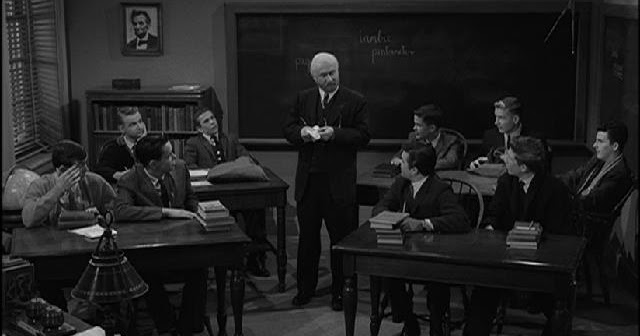
In early December I came across an episode of the old black and white Twilight Zone television series called “The Changing of the Guard” (the last episode of Season 3). I have spent a lot of time thinking about it and watching it more than once.

This story is set in 1950. An elderly professor is being retired after 51 years of teaching poetry in a boy’s school in Vermont. He begins to feel as if he has made no positive contribution to the world around him and contemplates suicide. In this state of mind, he wanders out into the snowy winter cold, with his pistol in hand. Standing before a statue of famous educator Horace Mann, he raises the pistol to his head. At that moment he hears the school bell ringing. Puzzled, he wanders into his classroom. As he stands there, he watches the ghosts of former students take their seats, many who had passed away. They share the lessons he taught them, lessons in courage, humanity, and self-sacrifice. One was a United States Marine who died on Iwo Jima during World War II, receiving the Congressional Medal of Honor. Another was the first to die in the battle of Pearl Harbor, but only after he had saved seven men trapped in a boiler room aboard a United States Navy ship. A third was a medical scientist who had offered to take x-ray treatments in an early experiment to destroy cancer cells but ended up dying of leukemia anyway. There were others who shared the morals and values they had gained from their interactions with this humble teacher of boys who became good men.

It is quite a contrast to the chaos, anger, and hatred of the changing of the guard America has been experiencing during  the 2024 presidential election season and its aftermath. We could have used a few good men and women taught by such teachers.

Having now reached Senior Citizen Status in my own right, I think more and more about the changing of the guard in my family and in my sphere of influence. Have I taught them well enough? Have I passed on the values and lesson they will need to successfully navigate through their own lives? Only time will tell, as the professor found out in his vision.

The Old Testament Book of Proverbs is filled with gems of wisdom, in particular Proverbs 22:28 when it tells us to “Remove not the ancient landmarks”.  Ancient landmarks were standing stones set up to mark boundaries.  During a time of war, the Prophet Samuel “took a stone and set it up between Mizpah and Shen and called its name Ebenezer; for he said, “Till now the Lord has helped us.” (Book of Samuel 7: 12-13).  The word “ebenezer” means “stone of help” in Hebrew and is referred to in one of my favorite hymns “Come Thou Fount of Every Blessing” (first line of the second stanza): “Here I raise my Ebenezer, hither by thy help I come.” Identifying the important landmarks of our civilization is critical to keeping the peace in any Changing of the Guard.

The first landmark is the knowledge of a Divine Creator. It is the most important landmark of Christianity, one which is the key standing stone from which all other landmarks should be measured.

The Old Testament gives us the Ten Commandments as basic laws to live by, the first three relating to our relationship with God: “Thou shalt have no other gods before me”, “Thou shalt not make any graven images (idols)”,  and “Thou shalt not take the name of the Lord thy God in vain” (Exodus 20:3 – 7).

1 Corinthians 8:6 states, “But to us there is but one God, the Father, of whom are all things, and we in him; and one Lord Jesus Christ, by whom are all things, and we by him.”

In the Church of Jesus Christ of Latter-day Saints, the First Article of Faith states, “We believe in God, the Eternal Father, and in His Son, Jesus Christ, and in the Holy Ghost.”

Did you know that 49 out of the 50 state constitution preambles mention a supreme being by one of several names for God?  This includes Alaska: “We the people of Alaska, grateful to God and to those who founded our nation and pioneered this great land, in order to secure and transmit to succeeding generations our heritage of political, civil, and religious liberty within the Union of States, do ordain and establish this constitution for the State of Alaska.”

There are other landmarks too numerous to list but these include faith, hope, charity, courage, compassion, humility, patience, and kindness.

The moral of the Changing of the Guard story is found also found Proverbs 22:6, “Train up a child in the way he should go: and when he is old, he will not depart from it”.


Originally published in the Faith column of The Frontiersman.

Photo credit 1: “Changing of the Guard” Twilight Zone television series, Season 3.

Photo credit: Stones of Stenness

Faith of Our Fathers

One of my favorite hymns is “Faith of Our Fathers.” The text was written by Frederick W. Faber in 1849. Faber was raised in England as a member of the Anglican Church. He eventually became a Vicar, then, shockingly to all around him, he left the Anglicans and joined the Catholic faith. About six years later, he wrote “Faith of Our Fathers.”

As I was reviewing this hymn a few Sundays ago, I started thinking, “what is the faith of our fathers?” My father was Free Methodist, my mother claimed Catholicism. I spent elementary school and part of junior high in Free Methodist and Baptist schools. I attended mass regularly for a while, even taking my first Holy Communion at the hands of a priest who is now a Cardinal. My grandparents were generally protestant, tending towards what is known as “Calvinism,” but I also come from ancestors who were Mennonite, Puritan, Pilgrim, Catholic, Quaker, Dunkers, and Reformed, just to name a few. I am a member of The Church of Jesus Christ of Latter-day Saints.

I have met interesting people from very different backgrounds, and various religious philosophies, or what we call “faiths.” During high school I worked at a Jewish mortuary in Los Angeles, California, and also spent time with friends in the Jesus People movement. Other friends were of the Bahai and Buddhist belief systems. Today I have a couple of friends who are Antiochian Orthodox, one of whom converted from the Mennonites.

The word “faith” has many definitions. For this discussion, I choose to use one from Webster’s 1828 American Dictionary: “the assent of the mind to the truth of a proposition advanced by another; a belief, or probable evidence of any kind.”

The first verse of the aforementioned hymn is as follows: “Faith of our fathers, living still, in spite of dungeon, fire, and sword; Oh, how our hearts beat high with joy whene’er we hear that glorious word. Faith of our fathers, holy faith, we will be true to thee till death!”

Martyrdom and persecution come to mind when I read the above stanza. A few examples that strike me are Christians burned at the stake, or otherwise abused, like William Tyndale or Jacob Hus. One of my ancestors is the Reverend Obadiah Holmes who is considered the first Baptist martyr in America. He was beaten by the Puritans for teaching a doctrine about Baptism with which they did not agree.

Another person who was persecuted is a Jewish woman I knew when I worked at the mortuary. She was a tall, slender, woman with short graying hair. She was very quiet in her temperament and always wore long sleeves, even in the southern California heat. I found out why one day when her sleeve pulled up and I saw numbers tattooed on her arm. She was an Auschwitz concentration camp survivor. Persecution and martyrdom are not selective in their choice of victims.

Verse 2 goes: “Faith of our fathers, we will strive to win all nations unto thee, And thru the truth that comes from God, mankind shall then be truly free. Faith of our fathers, holy faith, we will be true to thee till death!”

In approximately A.D. 33, Jesus Christ gave what has become known as the “Great Commission.” He said to his disciples, “Go ye therefore, and teach all nations, baptizing them in the name of the Father, and of the Son, and of the Holy Ghost: Teaching them to observe all things whatsoever I have commanded you: and, lo, I am with you always, even unto the end of the world. Amen” (KJV Matthew 28:19-20).

To my knowledge, all of the Christian faith traditions have tried to fulfill this Commission and fill the Earth with the gospel of Jesus Christ. Untold amounts of money, time, effort, and sacrifice have been expended to this end and continue to be expended, indeed, even to death itself. What an amazing accomplishment!

Verse 3: “Faith of our fathers, we will love both friend and foe in all our strife, And preach thee, too, as love knows how, by kindly words and virtuous life. Faith of our fathers, holy faith, We will be true to thee till death!”

Admittedly, some who claim Christianity as their faith haven’t lived up to the standard set by Jesus Christ in Matthew 5:1-12, a passage of scripture known as “the Beatitudes,” but more—oh so very many more!—have successfully lived those principles or died trying.

As we go about our lives as Christians, let us remember to be more humble, to comfort those that mourn, to be meek, to seek righteousness, to be merciful, to be pure in heart, to be peacemakers, and to remember that Jesus also said, “Thou shalt love the Lord thy God with all thy heart, and with all thy soul, and with all thy mind. This is the first and great commandment. And the second is like unto it, Thou shalt love thy neighbor as thyself. On these two commandments hang all the law and the prophets” (KJV Matthew 22:37-40).

This is what Jesus taught us, and this is the “Faith of Our Fathers.”

(This was originally published in the Faith column of The Frontiersman newspaper in Wasilla, Alaska: Faith of our Fathers.)

Let’s Talk about Spiders

Several years ago, there was a comedy show called “Kids say the Darndest Things”, and one of my grandsons is no exception when it comes to saying the unexpected.  One Sunday, I took him to Primary, the children’s program at my church.  One of the things children are asked to do is to give a two-minute talk on a gospel related subject.  This particular day, four-year-old Tristan and I were a bit late, so we sat in the back row.  It was discovered that none of the children who had been assigned talks were in attendance and the leader asked if anyone would like to do so.  Tristan immediately jumped up and said he would, and off he went down the aisle to the podium without a care in the world.  He started speaking about spiders, all sorts of spiders, all sorts of facts about spiders.  For about five minutes he expounded on spiders.  Finally, the children’s leader was able to guide him to a close and back he came to me, happy as a spider with a yummy fly for dinner in his web, you might say. 

Tristan and I had other spider adventures.  When he was about 10 years old, I was employed as a Library Clerk in the Quincy Branch of the North Central Regional Library District, and had the opportunity to develop a “Spiders and Spinning” story time for the Summer Reading Program.  We traveled to several small libraries in rural farming and mountain communities in Washington State.  Tristan would help me set up my spinning wheel and my spider display, assist with my spider puppet while I would read books about Native American tales of Spiderwoman/Spider Grandmother, Eric Carle’s classic The Very Busy Spider, and other spider stories.  I would demonstrate how humans spin and explain how spiders spin and told them that the people of China had once spun and wove a spider silk dress which was later presented to a Queen of England.  Then we would both help the children with a couple of craft projects we would bring along. 

Tristan grew up and a few months ago he became a father for the first time, who also happens to be my first great grandchild.  While playing with that little baby and remembering Tristan’s childhood, these memories came to mind.  As I pondered them I realized that, as amusing to me as these tales might be, the real story isn’t about spiders at all.  What Tristan’s actions as an innocent four-year-old child and a storyteller helper had actually taught was the principle of seeing a need and stepping forth to fill it, without complaint, without dragging one’s feet, just jumping in and doing what needed to be done, come what may.   What a natural lesson in how easy it really is to be a good human and how to follow the path of our Savior, Jesus Christ, in our everyday lives. 

Many people are concerned about the way they see the world is headed these days.  Not a new concept.  Each generation has feared for the upcoming generation, but this time around something has fundamentally changed the way we approach and look at the world in our modern culture.  In our efforts to accomplish more by becoming more connected electronically, we are losing the ability to connect personally with the people around us.  We are losing faith in ourselves and in humanity because we are not connecting with real people in real time.  We are losing the ability to be good humans.  We are becoming fear-full instead of faith-full.  We no longer see what is happening around us so easily as in the past.

Sometimes the principle of unexpected consequences is really the principle of unexpected lessons learned.  “Out of the mouth of babes”, Jesus said in Matthew 21:16.   In our troubled world today, with its civil disturbances, its wars and rumors of wars, its anger and hate and intolerance, we would do well to remember these words from the prophet Isaiah:  “The wolf also shall dwell with the lamb, and the leopard shall lie down with the kid; and the calf and the young lion and the fatling together; and a little child shall lead them” (Isaiah 11:6).   I hope we can learn to disconnect from our electronic devices and to reconnect with the people around us by giving a quick smile, a helping hand, and by creating opportunities for our children (and grandchildren) to learn the art of serving others, even if it involves something unexpected, like spiders.

May we find the same courage to go forth when the need arises and be the voice of confidence and reason in our daily lives and the lives of those around us, as set by the examples of both Jesus Christ and the young Tristan.

Originally published in the Frontiersman newspaper.

Karen Murray is a member of the Church of Jesus Christ of Latter-day Saints experiencing life as a wife, mother, family historian, author, and political activist.

The Sea of Glass

Truth in science and truth in religious teachings are, in fact, truth.  They do not negate each other, they complement each other, they support each other.  If they do not meld into one fact now, they may very well do so in the future.  It is up to us to use our minds and spiritual intuition to seek out the correct puzzle piece with which to complete the picture, moving forward in faith, and not settle for a piece that fits, mostly, and force it in.  In this article we may be on the path to just such a discovery.

earths-layers


One morning, as I was listening to this episode one of my favorite podcasts called “Suspicious Observers”, I heard an astounding scientific fact – 97% of white dwarf stars, such as our sun will become, eventually morph into crystal globes.  These globes will eventually gather dust and matter on their surfaces, and it was speculated that perhaps our earth is one of these types of globes, with an old star as its crystalline core.

I did a little more research and found an article on the Space.com website entitled “The Sun Will Turn Into a Giant Crystal Ball After it Dies”.   The facts and information in the article totally astounded me and brought a lot of thoughts to mind.  The lead author of the study is Pier-Emmanuel Tremblay, a physicist at the University of Warwick in England. Here are a few quotes from the article and my thoughts on them:

  • All white dwarfs will crystallize at some point in their evolution.
  • This means that billions of white dwarfs in our galaxy have already completed the process and are essentially crystal spheres in the sky.
  • The sun itself will become a crystal white dwarf in about 10 billion years. 

The author then goes on to explain the importance of oxygen and carbon in the crystallization process, which I found thought-provoking. To quote a section of the article:

“The result is likely a core composed of crystallized oxygen and a mantle dominated by carbon. ‘Not only do we have evidence of heat release upon solidification, but considerably more energy release is needed to explain the observations,” Tremblay said. “We believe this is due to the oxygen crystallizing first and then sinking to the core, a process similar to sedimentation on a riverbed on Earth. This will push the carbon upward, and that separation will release gravitational energy.” 

What this says to me is that the current model of the earth’s core being composed of iron may be fundamentally wrong.  The rest of this paragraph is pure speculation on my part. The oxygen-carbon cycle described may explain why space dust and matter particulates might adhere to such a star in it crystal stage, eventually creating a mantle and a crust.  The crystallization of the oxygen which pushes the carbon created by the heating of matter causes gravity on the planetary body.  It also creates the atmosphere we know today – 78.09% nitrogen, 20.95% oxygen, 0.93% argon, 0.04% carbon dioxide, and small amounts of other gases.  The process by which the other gasses form would be a chemistry lesson for another day.

Carbon dioxide in the atmosphere at a higher ratio in the past would have created the greenhouse effect so necessary for life to begin and to sustain that life in abundance, as evidenced by the fossil record.

All this reminded me of several scriptures, which I will share and comment on below:

  • Speaking of the sphere upon which God dwells, John the Revelator says in Revelation 4:6 – “And before the throne there was a sea of glass like unto a crystal”. 
  • Joseph Smith asked for the Lord for clarification of the meaning of the term “sea of glass”. The answer was given in Doctrine and Covenants 77: 1 – “It is the earth in its sanctified, immortal and eternal state.” 
  • Doctrine and Covenants 88:18-19: “Therefore, [the Earth] must needs be sanctified from all unrighteousness, that it may be prepared for the celestial glory; For after it hath filled the measure of its creation, it shall be crowned with glory, even with the presence of God the Father.” 
  • 2 Peter 3:7 speaks of a “burning with fire” of the heavens and earth. Certainly our current sun going through the process of becoming a white dwarf would fit this imagery.  The concept of a cleansing by fire is also mentioned in Doctrine and Covenants 64:24. 
  • Perhaps in the process of our sun becoming a white dwarf in its own right, the earth is caught up in the fire of its expansion and is celestialized…”And the end shall come, and the heaven and the earth shall be consumed and pass away, and there shall be a new heaven and a new earth.” [Doctrine and Covenants 29:23] 
  • “The place where God resides is a great Urim and Thummim. This earth, in its sanctified and immortal state, will be made like unto crystal and will be a Urim and Thummim to the inhabitants who dwell thereon, whereby all things pertaining to an inferior kingdom, or all kingdoms of a lower order, will be manifest to those who dwell on it; and this earth will be Christ’s.” [Doctrine and Covenants 130:8-9] 

My commentary:  I believe it is possible that the star cycle of life goes something like this: a star like our sun burns out its energy becoming a white dwarf – which goes through a crystallization process – which then begins to accrue matter about its oxygenated-carbonated crystal core until a planet suitable for life is formed – after an time period allotted by God, this planet goes through a process of celestialization in which the properties of a Urim and Thummin are naturally imbued into the earth crystal itself.

In considering all of these things, I can more easily understand Moses when he says, “Now, for this cause I know that man is nothing, which thing I never had supposed” [Moses 1:10].  We seem so insignificant compared to the wonders of the Universe, yet we are so important that “God so loved the world that he gave his only begotten son, Jesus Christ, that whosever believeth in him should not perish, but have everlasting life” [John3:16].  We exist symbiotically with the Universe – we are of it and through in and in it.

I leave you with this thought from Max Erhmann’s “Desiderata”:

You are a child of the universe, no less than the trees and the stars;

you have a right to be here. And whether or not it is clear to you,

no doubt the universe is unfolding as it should.

Therefore be at peace with God, whatever you conceive Him to be,

and whatever your labors and aspirations,

in the noisy confusion of life keep peace with your soul.

With all its sham, drudgery, and broken dreams,

it is still a beautiful world.

Karen Signature


The Nature of Time

Sun_Moon_Stars“Let there be lights in the firmament of the heaven to divide the day from the night; and let them be for signs, and for seasons, and for days, and years.” (Genesis 1:14)
Time.  What is the nature of Time, I wondered as I sat stunned by the beauty of a full autumn moon  with its brilliant light filling the sky.    The next day most of America would dutifully adjust their clocks back one hour as they head for bed.   The morning after everyone’s lives would be synced to the artificial Time of calendars and clocks so we all be about the business of the day, and our society.

Modern time is an artificial construct overlaid on the natural cycles of Nature, which were given to us by our Creator.   Man changes them according to his will, by legislating Daylight Savings Time (DST), for example.  DST gives no one more time, nor does it take away time.   It only re-orders the natural cycle to meet Man’s demands upon other Men.   We got along very well on this planet without it.

God is no respecter of persons or societies.  He has set in motion a wonderful clockwork, designed to give us the best markers for the time and seasons that all can understand, no matter where we live on this planet, nor the era in which we live.  He does this without price or strings attached.   All we need do is raise up our heads and observe the sky in motion around us.

Our ancestors observed the sky.   They filled the landscape with standing stones to mark the movement of the sun, the moon, and the stars.   Nothing mystical or mysterious, just creating on earth what they observed in the heavens.   What if we all lived our lives this way?

The Sun.  Many cultures have built their houses with the doorway to the East, to welcome the sun into their homes – to give them light and warmth as they start their day.   The sun marks the hours of the day with a simple sundial – a stick in the ground, a standing stone, fashioned from metal, arranged in a circle.  The length and position of the shadow on the edge of the circle determines the hour of the day.  Simple, easy, and always the same, self-adjusting for latitude and longitude, though a cloudy day could make it more difficult.  The sun’s position on the horizon also determines the procession of the seasons, also easily marked wherever one lives.

The Moon.   Cold-hearted orb that rules the night, as intoned by the rock band Moody Blues.   Cold as a new moon withholding its light maybe, but brilliant and warm when full.   The Moon marks the passage of the month, each quarter, each crescent, waxing and waning through its 29 – 30 day cycle.   Anyone could say “in three moons”, or “at the next full moon”, and all would understand by observing the night sky the meaning of the time of the expected event.

The Stars.   I often wonder if astrology is simply astronomy gone awry.   There are patterns in the stars, which we call “constellations”, that progress through the night sky at a predictable rate, depending on the hemisphere in which one lives.   In Fall/Spring Pegasus and Andromeda dominate.  In Winter/Summer, we see Orion and Canis Major.  In Spring/Fall, Leo and Virgo.   In Summer/Winter, Sagittarius, Lyra, and Hercules.  Their progression tells us where we are in the year and helps us understand what we should be doing to prepare for the next season.   Our ancestors, no matter where they lived on the planet and no matter what their culture, recognized these patterns and used them for navigation as well as for determining the seasons.   Some assigned characteristics to each constellation, projecting them onto anyone born within the season of the star’s dominance.  For example, one could say that he or she was born on the third hour of the day of the first full moon in Orion, and all would know they were born at 3 am on May 10, 2017, and since Orion is a hunter, then one born under the sign of Orion would possess skills necessary for hunting, whether for food or for information, as we now live in the Information Age.  A good provider or a good detective or a good researcher, perhaps?

All these random thoughts led me to wonder what would happen if we all went back to living according to Nature’s cycles rather than Man’s impositions.   Would we sleep better?   Would we be healthier?  Would we be more productive and enjoy life more?   What would happen to modern society as we know it?  What do you think?