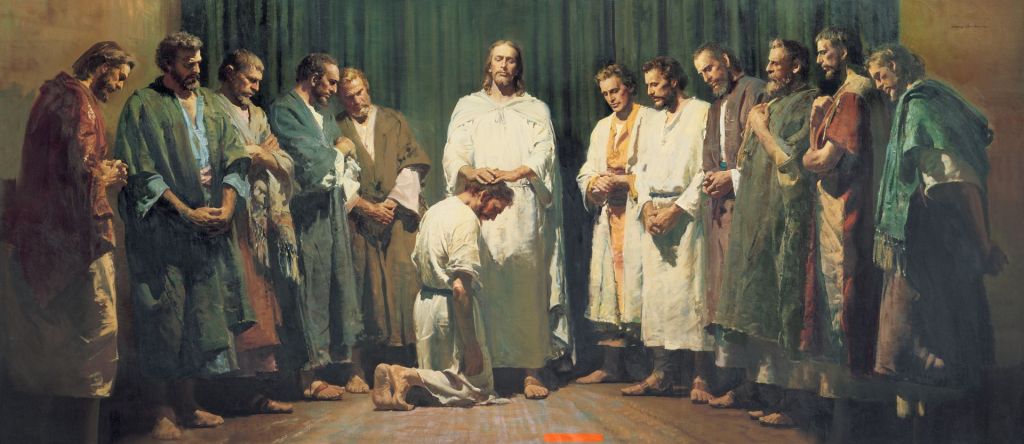
“Never doubt that a small group of thoughtful, concerned citizens can change the world. Indeed, it is the only thing that ever has.” -- Anthropologist Margaret Mead, 1901-1978
The recent death of Pope Francis took me down memory lane to my junior high years when I joined the Catholic Church for a time. The man who gave me my first Holy Communion was Archbishop Timothy Manning of Los Angeles, California. Later he became a Cardinal serving as cardinal-elector during two conclaves which selected two different Popes – John Paul I and John Paul II. He passed away in 1989.
I loved my time in the Catholic Church. I visited various types of nunneries, pondering how I could best serve God. One of the most spiritual weekends I had as a teenager was during a school field trip to a monastery in Valyermo, California. In spite of such positive experiences, I chose another religious path in adulthood for various reasons.
Even though I didn’t remain in the Catholic faith, one thing is self-evident: over two thousand years of history and the lives of perhaps over a billion people globally have been influenced by its teachings and actions. European political and religious history felt its guiding force for good or ill, spilling over into the Americas and beyond beginning in the 1500s. In fact, the first physical Christian church to be built in what would eventually become the United States of America was the Catholic San Miguel Mission church founded in 1610 in the area now known as Santa Fe, New Mexico.

The movement which became the Catholic Church of today, has had many branches, known by many names and in many nations. Orthodox Christianity, Protestant Christians, Congregationalists, Baptists, Non-Denominational Christians, Hutterites, Amish, countless names and countless generations – all have their root in one of Margaret Mead’s small groups of “thoughtful, concerned citizens” who, indeed, changed the world.
This small group are known as the Apostles of Jesus Christ, a small group of twelve imperfect men, among the leading devoted disciples of Jesus Christ in the days of Roman Judea, without internet, without phones or radio or television or even newspapers. It was their tireless travelling to preach the Gospel of Jesus Christ and their dedication to writing letters and histories that changed the world. The truth of their impact cannot be denied by any worthy historian of note. The world of today is what it is because of their committed concern for the salvation of humanity.
Next year, America will be celebrating the 250th anniversary of the signing of its Declaration of Independence, another example of a “small group of thoughtful, concerned citizens” who changed the world. Fifty-four men who gave all they had for the cause of Liberty, pledging their lives, their fortunes, and their sacred honor. Like the ancient Apostles, some lost their lives and the lives of family members.

American influence definitely re-focused the global political world from empire building to the concept of Liberty and Freedom of Conscience for every member of the human race in the short passage of time since the Revolution. It could be seen as the second phase of the movement led by the original Twelve Apostles, this time without regard to specific religious or political affiliation.
The basic “small group of thoughtful citizens” is the family. Within a self-contained, functioning family, its members learn how to work together, how to solve disputes, how to love one another, skills that are a strong foundation for leadership as members move into the larger world around them.
Can we change the world? Yes! In our homes and families, in our churches or other community organizations, the list is endless, and the causes are endless. Wherever these “small groups of thoughtful concerned citizens” gather together and focus their energies on providing solutions to problems and challenges, they will definitely change their world.
Business leader Warren Bennis said, “Every great group is an island… but an island with a bridge to the mainland.” Reminds me of Alaska’s own Aleutian Islands, a long chain of what appear to be isolated communities connected originally by sea-faring skin boats or dog sleds on the ice in winter but now by better boats, airplanes, the internet and satellite technology.

We don’t build our bridges to humanity the same way the original Apostles did, but we can reach out to “the mainland” in other ways not even imaginable to them. Email, mobile phones, videoconferencing, social media are the first things we think of but let’s not forget about reaching out to others in our real-world sphere of influence, those with whom we come into physical contact daily or weekly as we go about our lives, some who may share our concerns.
Do not be discouraged as you go about trying to change the world around you. God promises, “Fear thou not; for I am with thee: be not dismayed; for I am thy God: I will strengthen thee; yea, I will help thee; yea, I will uphold thee with the right hand of my righteousness.” (Isaiah 41:10)

Originally published in the Faith column of the Frontiersman newspaper: Changing the World

 Liberty Principia