The Testimony of Mushrooms

“I believe in Christianity as I believe that the sun has risen: not only because I see it, but because by it I see everything else.”  C. S. Lewis
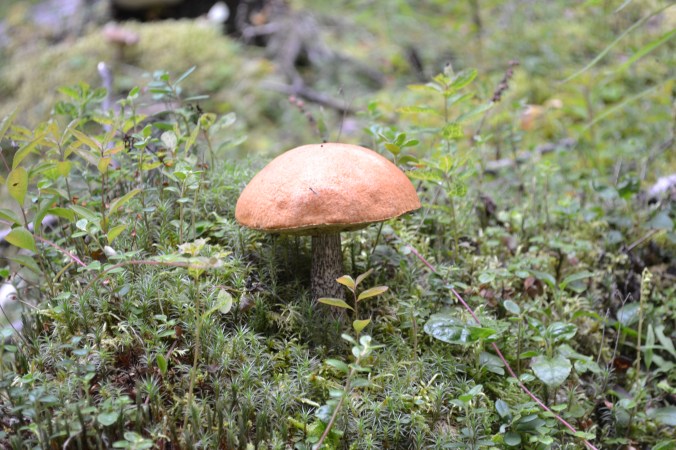
One day last fall, during mushroom season, I decided to research the Amanita muscaria mushroom, the red ones with white raised spots, which grow so abundantly in our area. What makes such a pretty little thing so poisonous? This led me down an interesting path I call a “Thought Trek”. They are never boring journeys, rambling maybe, but never boring.

Arsenic. That’s why Amanitas are deadly, they draw up arsenic from the soil. Something called Amatoxins form and that is what makes people sick, even die when Amanitas are eaten. I began to wonder what the arsenic levels in my soil might be with the large number of Amanitas which grow each year. What about our well water? Is it safe? Why do slugs eat them and don’t seem to die? 

I also noticed that these types of mushrooms seem to be part of an ecosystem which includes spruce, birch, lichens, and mosses. Is there a bio-chemical relationship between all these plants? That required more research but for the sake of the reader, the short answer is yes. Each one plays a vital role in keeping each other healthy and happy and non-poisonous to each other. Where arsenic exists, mushrooms pull it up out of the soil, chemically transmute it so that it becomes inert (less harmful to humans and slugs apparently). Still, eating them in too large of a dose can still sicken or kill the consumer.

It is the interconnectedness of this particular mini-ecosystem in my back yard which led me to ponder on how this all happened.  There seemed to be only two ultimate questions to consider.  Question 1: did this system evolve over thousands if not millions of years?  Question 2: did an Organizing Intelligence engineer the natural laws we see in operation around us today?

I stood on my second story deck, surveying and pondering the options every day for about a month. If my ecosystem evolved, how did any of the independent species survive long enough to pass on descendants if there were no magic mushrooms to absorb arsenic? How did each know what another would need bio-chemically in order to evolve a mechanism to meet that need without dying out during the vulnerable millennia of existence?  I tried to imagine the concept of Evolution, Natural Selection, and millions of years. It’s quite a leap of faith to think that all the imperfect stages of each tree, or moss, or mushroom somehow survived until they reached the balance we see before us in our modern world.

I decided to take another leap of Faith. Is there some Organizing Intelligence responsible for all this? It is human nature to organize various pieces of things and concepts into a civilization with all its art, engineering, books, computers, and more. If we just threw the basic elements of clay or metal or amino acids into a shallow pond of water, would they eventually combine and grow into magnificent cities? Logic and reason tell us this would never happen in a million years or a trillion years. Why do we think that the basic building blocks of atoms and molecules would magically organize themselves into complicated biological organisms and systems without a triggering force? The fact that we can even think about these things implies an organized intelligence.

Back to C. S. Lewis statement “I believe in Christianity as I believe that the sun has risen: not only because I see it, but because by it I see everything else.”   My month-long pursuit of trying to figure out the connectedness of my little birch-spruce-mushroom-moss-lichen forest from an evolutionary standpoint was a failure in terms of the godless world view of the modern world. I found that, like C.S. Lewis, I can only interpret the world through the lens of Christianity, a basic tenet of which is that there is a God, by whatever name you call Him, or whatever you conceive the Organizing Intelligence to be. Nature itself testifies of this, as do we as human beings, created in His image – organized in our complex human biology, organized in our complicated thought world, and organized in relationship to ourselves and our environments.

I find the testimony of mushrooms to be a powerful one. It is my Faith and I’m sticking with it.


Let’s Talk about Spiders

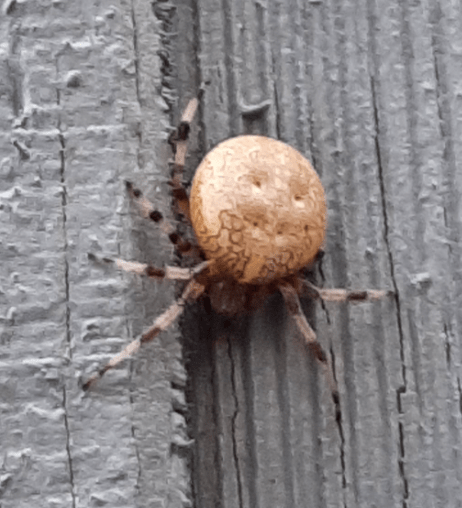
Several years ago, there was a comedy show called “Kids say the Darndest Things”, and one of my grandsons is no exception when it comes to saying the unexpected.  One Sunday, I took him to Primary, the children’s program at my church.  One of the things children are asked to do is to give a two-minute talk on a gospel related subject.  This particular day, four-year-old Tristan and I were a bit late, so we sat in the back row.  It was discovered that none of the children who had been assigned talks were in attendance and the leader asked if anyone would like to do so.  Tristan immediately jumped up and said he would, and off he went down the aisle to the podium without a care in the world.  He started speaking about spiders, all sorts of spiders, all sorts of facts about spiders.  For about five minutes he expounded on spiders.  Finally, the children’s leader was able to guide him to a close and back he came to me, happy as a spider with a yummy fly for dinner in his web, you might say. 

Tristan and I had other spider adventures.  When he was about 10 years old, I was employed as a Library Clerk in the Quincy Branch of the North Central Regional Library District, and had the opportunity to develop a “Spiders and Spinning” story time for the Summer Reading Program.  We traveled to several small libraries in rural farming and mountain communities in Washington State.  Tristan would help me set up my spinning wheel and my spider display, assist with my spider puppet while I would read books about Native American tales of Spiderwoman/Spider Grandmother, Eric Carle’s classic The Very Busy Spider, and other spider stories.  I would demonstrate how humans spin and explain how spiders spin and told them that the people of China had once spun and wove a spider silk dress which was later presented to a Queen of England.  Then we would both help the children with a couple of craft projects we would bring along. 

Tristan grew up and a few months ago he became a father for the first time, who also happens to be my first great grandchild.  While playing with that little baby and remembering Tristan’s childhood, these memories came to mind.  As I pondered them I realized that, as amusing to me as these tales might be, the real story isn’t about spiders at all.  What Tristan’s actions as an innocent four-year-old child and a storyteller helper had actually taught was the principle of seeing a need and stepping forth to fill it, without complaint, without dragging one’s feet, just jumping in and doing what needed to be done, come what may.   What a natural lesson in how easy it really is to be a good human and how to follow the path of our Savior, Jesus Christ, in our everyday lives. 

Many people are concerned about the way they see the world is headed these days.  Not a new concept.  Each generation has feared for the upcoming generation, but this time around something has fundamentally changed the way we approach and look at the world in our modern culture.  In our efforts to accomplish more by becoming more connected electronically, we are losing the ability to connect personally with the people around us.  We are losing faith in ourselves and in humanity because we are not connecting with real people in real time.  We are losing the ability to be good humans.  We are becoming fear-full instead of faith-full.  We no longer see what is happening around us so easily as in the past.

Sometimes the principle of unexpected consequences is really the principle of unexpected lessons learned.  “Out of the mouth of babes”, Jesus said in Matthew 21:16.   In our troubled world today, with its civil disturbances, its wars and rumors of wars, its anger and hate and intolerance, we would do well to remember these words from the prophet Isaiah:  “The wolf also shall dwell with the lamb, and the leopard shall lie down with the kid; and the calf and the young lion and the fatling together; and a little child shall lead them” (Isaiah 11:6).   I hope we can learn to disconnect from our electronic devices and to reconnect with the people around us by giving a quick smile, a helping hand, and by creating opportunities for our children (and grandchildren) to learn the art of serving others, even if it involves something unexpected, like spiders.

May we find the same courage to go forth when the need arises and be the voice of confidence and reason in our daily lives and the lives of those around us, as set by the examples of both Jesus Christ and the young Tristan.

Originally published in the Frontiersman newspaper.

Karen Murray is a member of the Church of Jesus Christ of Latter-day Saints experiencing life as a wife, mother, family historian, author, and political activist.

The Nature of Time

Sun_Moon_Stars“Let there be lights in the firmament of the heaven to divide the day from the night; and let them be for signs, and for seasons, and for days, and years.” (Genesis 1:14)
Time.  What is the nature of Time, I wondered as I sat stunned by the beauty of a full autumn moon  with its brilliant light filling the sky.    The next day most of America would dutifully adjust their clocks back one hour as they head for bed.   The morning after everyone’s lives would be synced to the artificial Time of calendars and clocks so we all be about the business of the day, and our society.

Modern time is an artificial construct overlaid on the natural cycles of Nature, which were given to us by our Creator.   Man changes them according to his will, by legislating Daylight Savings Time (DST), for example.  DST gives no one more time, nor does it take away time.   It only re-orders the natural cycle to meet Man’s demands upon other Men.   We got along very well on this planet without it.

God is no respecter of persons or societies.  He has set in motion a wonderful clockwork, designed to give us the best markers for the time and seasons that all can understand, no matter where we live on this planet, nor the era in which we live.  He does this without price or strings attached.   All we need do is raise up our heads and observe the sky in motion around us.

Our ancestors observed the sky.   They filled the landscape with standing stones to mark the movement of the sun, the moon, and the stars.   Nothing mystical or mysterious, just creating on earth what they observed in the heavens.   What if we all lived our lives this way?

The Sun.  Many cultures have built their houses with the doorway to the East, to welcome the sun into their homes – to give them light and warmth as they start their day.   The sun marks the hours of the day with a simple sundial – a stick in the ground, a standing stone, fashioned from metal, arranged in a circle.  The length and position of the shadow on the edge of the circle determines the hour of the day.  Simple, easy, and always the same, self-adjusting for latitude and longitude, though a cloudy day could make it more difficult.  The sun’s position on the horizon also determines the procession of the seasons, also easily marked wherever one lives.

The Moon.   Cold-hearted orb that rules the night, as intoned by the rock band Moody Blues.   Cold as a new moon withholding its light maybe, but brilliant and warm when full.   The Moon marks the passage of the month, each quarter, each crescent, waxing and waning through its 29 – 30 day cycle.   Anyone could say “in three moons”, or “at the next full moon”, and all would understand by observing the night sky the meaning of the time of the expected event.

The Stars.   I often wonder if astrology is simply astronomy gone awry.   There are patterns in the stars, which we call “constellations”, that progress through the night sky at a predictable rate, depending on the hemisphere in which one lives.   In Fall/Spring Pegasus and Andromeda dominate.  In Winter/Summer, we see Orion and Canis Major.  In Spring/Fall, Leo and Virgo.   In Summer/Winter, Sagittarius, Lyra, and Hercules.  Their progression tells us where we are in the year and helps us understand what we should be doing to prepare for the next season.   Our ancestors, no matter where they lived on the planet and no matter what their culture, recognized these patterns and used them for navigation as well as for determining the seasons.   Some assigned characteristics to each constellation, projecting them onto anyone born within the season of the star’s dominance.  For example, one could say that he or she was born on the third hour of the day of the first full moon in Orion, and all would know they were born at 3 am on May 10, 2017, and since Orion is a hunter, then one born under the sign of Orion would possess skills necessary for hunting, whether for food or for information, as we now live in the Information Age.  A good provider or a good detective or a good researcher, perhaps?

All these random thoughts led me to wonder what would happen if we all went back to living according to Nature’s cycles rather than Man’s impositions.   Would we sleep better?   Would we be healthier?  Would we be more productive and enjoy life more?   What would happen to modern society as we know it?  What do you think?